Published on:

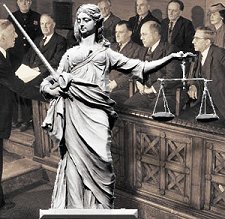
Lady-justice-jury.jpg Williams Oinonen LLC (Good Georgia Lawyer) is a member of AAJ, the American Association for Justice. AAJ shares the same commitment as Williams Oinonen LLC, making certain people have a fair shot at obtaining justice through the legal system when they are injured by the wrongdoing or negligence of others. We believe this even when it means challenging big foreign corporations. The problem is that a recent ruling by the United States Supreme Court this past month makes it even harder to challenge foreign corporations and easier for companies outside the United States to get off the hook when they create a product that injures or kills an American consumer.

The U.S. Supreme Court’s decision in McIntyre Machinery v. Nicastro is the case that creates challenges and makes it much more difficult to hold foreign manufacturers accountable in the U.S. court system.

American Association for Justice Gibson Vance commented on this decision stating: “Simply put, foreign companies that market and sell their products in our country should not be able to evade accountability. . . In our global marketplace, this decision will allow foreign manufacturers to sell their products without adhering to our safety standards.”

Published on:

lady.JPGGood Georgia Lawyer’s favorite consumer advocacy group Public Citizen is pushing the FDA to issue a recall for a vaginal mesh used for women dealing with incontinence and other health issues. The consumer group warned that this product carries a high risk of serious injury for women.

Public Citizen filed a petition with the Food and Drug Administration urging them to recall the mesh to prevent women being exposed to serious life altering injuries.

The Food and Drug Administration did state that women who have these mesh implants are at greater risk of bleeding, infection, and pain compared to a more traditional surgery.

Published on:

disability.jpgThe American Disabilities Act prohibits employers from discriminating against employees on the basis of their disability. To be considered disabled under the ADA, you must have “a physical or mental impairment that substantially limits one or more major life activities” be a person who has a record or history of such an impairment, or be a person that is perceived to have such an impairment.

Title I of the ADA requires employers who have 15 or more employees to provide equal opportunities to qualified individuals with disabilities. For example, under Title I employers are prohibited from discriminating in hiring, recruitment, training, pay, and other employment privileges. Title I also prevents questions that an employer can ask about a prospective employee’s disability before the job offer is made. It also requires that employers provide reasonable accommodation to the known qualified individual with disability unless it creates undue hardship for the employer.

How do you ask for a reasonable accommodation?

Published on:

sobriety.jpg

A very sad tragedy occurred for a Clayton County, Georgia family this past weekend. Franky J. Cassidy, a 24-year-old man was struck and killed while riding his motorcycle home from work. Marvlyn Eugene Martin, was drunk driving when he ran into Cassidy’s motorcycle head on at 4 a.m.

Police stated that Martin had a blood-alcohol count of .192 percent, more than double the legal limit. Martin was charged with driving under the influence, homicide by vehicle, having an open container of alcohol in his vehicle and other traffic violations.

The Atlanta Journal Constitution reported that as of yesterday, Martin was held without bond on the homicide charge in the Clayton County jail.

The fact that Martin was driving intoxicated will certainly be admissible and would be the primary factor for proving punitive damages in a wrongful death lawsuit. At a trial of any civil or criminal action arising from actions alleged to have been committed by any person in violation of O.C.G.A. 40-6-391, evidence of the amount of drug or alcohol in a person’s blood, breath, urine or other bodily fluid at the alleged time, as determined by chemical analysis shall be admissible. Cheevers v. Clark, 214 Ga. App. 866 (1994).

When a police officer requests a driver to submit to a chemical test because of actions alleged to have been conducted while driving a motor vehicle under the influence of drugs or alcohol, and the police officer arrests that persons, O.C.G.A. 40-6-392 requires that the police officer informs him at the time of the arrest of his or her right to an independent analysis to test the amount of drugs or alcohol present in the blood stream in order for the test administered by the police to be admissible at trial to prove the accused was driving under the influence of drugs or alcohol. Carswell v. State, 171 Ga. App. 455 (1984).
Continue reading →

Published on:

contract fists.JPGGood Georgia Lawyer recently just explained when a contract needs to be in writing to be enforceable.

Today’s article discusses when contractual agreements are enforceable without writing, for example, an oral agreement between two parties. When should this matter? Well, for one thing, in the event of a contract dispute, not having a contract in writing would certainly matter. Contractual disputes sometimes hinge on the meaning of a contract. One party says that they were promised by the other party to do something and the other party claims otherwise. This is why, as a general rule, it is always better to make sure you have a contract in writing.

But what if you don’t? One of the defenses to a breach of contract lawsuit lies in the statute of frauds defense as explained in the earlier article, some contracts need to be in writing to be enforceable.

Published on:

Pit Bull.jpgLawmakers out in Pacifica, California are currently discussing passing a law requiring pit bulls to be spayed or neutered after a pregnant woman, Darla Napora, was bitten to death dozens of times by her own pet pit bull. The pit bull, covered in Mrs. Napora’s blood and hovering over her body when officers arrived, immediately was tied up by police officers. Unfortunately, the pit bull was able to break free and charged at the police officers as they tried CPR to restart Mrs. Napora’s heart. The dog was shot by the police officers.

The law requiring pit bulls to be spayed and neutered was passed in San Francisco in 2005 after Dianne Whipple was killed by a dog in Jan. 2001 and 12-year-old Nicholas Faibish was mauled by his family pit bulls in 2005.

The President of Society of Prevention of Cruelty to Animals in San Francisco, Jason Walthall, admits that this law has no doubt been effective. Walthall stated: “We did see the number of pit bulls being surrendered to our shelters drop fairly dramatically.”

Published on:

contract.jpgWe have discussed the definition of what a contract is in the state of Georgia. We’ve also discussed the different types of contracts in Georgia. And we’ve discussed rules for interpreting contracts here in Georgia.

Today we are going to discuss when a contract needs to be in writing. Another name for this is called “statute of frauds” which is a defense someone can use when they are sued for a breach of contract. It is a good defense because it keeps people from making up lies that aren’t true.

For example, even though a contract can at times be in the form of an oral agreement, what keeps my Uncle Bob from fraudulently filing a lawsuit and then telling a judge that I promised to pay him a million dollars in exchange for his rickety old shack that is falling apart? Obviously, I never would promise Uncle Bob, or anyone else that matter, one million dollars to buy their rickety old shack that is falling apart. But what keeps Uncle Bob or someone else from fraudulently claiming such an oral contract exists? Well, the answer lies in something called the statute of frauds: the requirement that certain contracts need to be in writing so you can prove the truthfulness of their existence and show that someone is not committing “fraud” by lying about a contract that does not exist.

Published on:

Morrow_1069660l.jpgThe AJC reported that a Cherokee County wrestling coach Robert Leslie Morrow, age 28, has been charged with sexual assault involving a 16 year old; and a teacher Kristin May, age 32, who failed to report it was also arrested.

The victim, who reported being assaulted, no longer attends school in Cherokee County.

Morrow confessed to the assault when interviewed by detectives. The victim reported the incident to a teacher, Kristin May, in January, but May did not contact police, according to the Cherokee County Sheriff. May, 32, of Canton, was arrested Thursday afternoon and charged with failure to report.

Published on:

MB900383616.JPGYesterday, the Department of Justice and four states filed a multibillion-dollar fraud suit against EMC, the Education Management Corporation, known as the nation’s second-largest for-profit college company. The states joining in the suit are California, Florida, Illinois and Indiana. The suit filed that EMC was not eligible for the $11 billion in state and federal financial aid it obtained from the United States government from 2003 through 2011.

The CEO of EMC was previously the head of the University of Phoenix, which has settled suits in the past related to very similar behavior.

While the civil lawsuit is one of many charging the ever growing for profit college industry, the case is the first where the U.S. government agreed to intervene on the whistle-blowers’ claims that they consistently violated federal law by paying recruiters based on how many students it enrolled. The lawsuit alleged that each year, the for profit company falsely certified that it complied with the law, making it eligible to receive student financial aid.

Published on:

Contract Newer.jpgGood Georgia Lawyer is sometimes asked by our business owners: “Can I sue for both fraud and breach of contract?” The answer is: “Yes you can!”

We have discussed this issue in a previous article, but we’ll offer further reasoning: It has been well established for decades in Georgia law that the Plaintiff can plead alternative theories of both breach of contract and fraud and is entitled to pursue inconsistent remedies until judgment. See Estate of Sam Farkas, Inc. v. Clark, 238 Ga. App. 115, 517 S.E. 2d 826 (1999) (referring to both causes of action); Carpenter v. Curtis, 196 Ga. App. 234, 236, 395 S. E. 2d 653 (1990) physical precedent) (“Affirmance of the contract by the defrauded party does not necessarily deprive him of the right to sue for damages for fraud, as the right to affirm and the right to fraud damages coexist.”)

Under O.C.G.A. § 13-5-5, fraud renders contracts voidable at the election of the injured party. Fraud ordinarily gives injured party option either to rescind contract so induced, or, by affirming contract, to claim damages as compensation. Barfield v. Farkas, 40 Ga. App. 559, 150 S.E. 600 (1929); Nalley & Co. v. Moore, 51 Ga. App. 718, 181 S.E. 429 (1935); Brown v. Ragsdale Motor Co., 65 Ga. App. 727, 16 S.E.2d 176 (1941).

Contact Information