Published on:

College_graduate_students.jpg
College rape and sexual assault lawyers at our firm advise that college students raped on campus can sue their college for negligence in failing to prevent a foreseeable crime. Most recently, the Department of Justice just came out with a recent study that 25 percent of college women, or 1 out of 4 college women, will be victims of rape or attempted rape before they graduate within a four-year college period, and that women between the ages of 16 to 24 will experience rape at a rate that’s four times higher than the assault rate of all women.

Colleges and universities have a legal duty to warn students of known dangers and to provide reasonable protection. If a crime is foreseeable, then a college can be held liable for not sufficiently protecting against it.

For example, at one highly respected university, a male student admitted to the Office of Student Affairs judicial officer that he had raped a fellow female student on the college campus. The Office of Student Affairs judicial officer showed unbelievable stupidity by failing to expel the student immediately, choosing rather to put him on probation and removing him to a separate dorm. The young woman who had been raped suffered serious psychological trama at the university’s handling of the situation, especially now that she was forced to face her rapist everyday on campus. Her grades quickly plummeted and she withdrew from the university the following semester.

This true story gets much worse however, because the male student rapist felt he had received a carte blanche pass to continue his predatory activities, since the university had chosen to only slap him on the wrist as a punishment for his admitted rape. Consequently, he continued his sexual deviant behavior directed towards other women on campus.

After more and more young female students came forward to report their fears about his stalking and other predatory behaviors, a scandal erupted as a whistleblower came forward to disclose that someone in the student affairs department had knowledge as to his previous misconduct and failed to punish him for actually admitting rape.

The most shocking aspect about this story isn’t only that it is true: rather that it happens all too often on college campuses. Oftentimes, universities and colleges are fearful of turning in their students to the authorities or even responding appropriately to a campus rape. Vice Presidents who are responsible for reporting the numbers of sexual assaults on campus pursuant to the Clery Act can feel pressured by the powers that be to minimize those reports, and often take the brunt of the blame for any unsafe environment occurring on campus. Additionally, judicial officers who are put in charge of handling such disciplinary proceedings are often not properly trained on sexual assault laws or appropriate rape counseling response.

This culture of silence and cover up is also created by university administrators reluctant to report the crime as required by federal law out of fear of the negative publicity and PR problem that may affect their enrollment numbers if the perception is created that their campus is unsafe.

The pressure to quash a rape incident can come up from a Director or Vice President to as high as the Board of Trustees or Board of Regents that oversees the President of the university. Additionally, universities sometimes act more fearful of being sued by the student charged with the rape, rather than the more likely event that the university will be sued by the rape victim because of the university’s own negligence in permitting a foreseeable danger to occur.

The irony of all of this is that in terms of risk management, failure to properly respond to sexual assault is one of the riskiest mistakes a universities can make. By permitting a culture where students are not educated on rape awareness, where sexual assault is silenced and rapes are covered up, and where sex assault is not treated with ‘zero tolerance;’ —universities become “aiders and abettors” and will be held responsible for their negligence in failing to warn or prevent students from a harmful, foreseeable danger.

This not only puts students’ safety at risk but creates the worst kind of public relations nightmare possible—practically insuring that the institution will be found liable for hundreds of thousands of dollars in damages from tort claims and bad publicity because of a failure to do the right thing.

Williams Oinonen LLC represents college students who have been raped or sexually assaulted on campus. Williams Oinonen LLC also offers preventative training on this issue and provides consulting workshops to university staff and faculty on all legal issues within education.
Continue reading →


Published on:

Thumbnail image for Toyota_Corolla_Verso.JPG
Toyota lawsuits and Toyota lawyers seem to have been the constant theme of the past year in Toyota news. Unfortunately, it doesn’t seem Toyota consumers can catch a break. After a wave of Toyota acceleration problems leading to injuries and lawsuits, the latest news is that Toyota is having a new recall for engine defects in their Toyota Corolla sedans and Matrix hatchbacks.

Toyota recalled 1.33 million of these vehicles in the U.S. and Canada yesterday because their engines may stall, the latest problems at the Japanese auto manufacturer.The recall covers 2005-2008 years sold in Canada and the U.S. Toyota has now recalled more than 10 million vehicles worldwide for problems that run from floor mats, faulty gas pedals, and more. Separately, General Motors Co. also conducting a recall on 200,000 Pontiac Vibes due to a similar problem.

Fortunately, both automakers will replace the problem parts at no charge and will mail notifications to owners in mid September. This same problem was caused by a possible defect in an engine control module manufactured by Delphi Corp, a auto parts supplier in Michigan.

The National Highway Traffic Safety Administration has been investigating the possibility of engine stalling in the Corolla and Matrix vehicles since last year and now with this latest news of recalls, reported that it has stepped up its investigation. If you or a loved one has been seriously injured due to a Toyota or other auto defect or malfunction, Georgia law entitles you to compensation for your injuries.

In Georgia, Toyota manufacturers would be held strictly liable in products liability torts action. Georgia lawmakers did this in order to protect the consumer by shifting the burden of the loss to the wrongdoer, i.e. the manufacturer of the defective product that caused the injuries. The essential elements of this tort action are: first, the manufacture of the product (Toyota manufactured the cars); second, a defective product (the vehicles are in fact defective hence the recalls); third, an injury to a natural person proximately caused by the defect (multiple Toyota owners suffered injuries due to this defect); fourth, a sale of the product as a new product (Toyota dealers sold these new vehicles off their dealership lots); and fifth, the existence of the defect at the time the product left the manufacturer’s control (the defect was present when Toyota sold the car to consumers.)
Continue reading →

Published on:

Thumbnail image for Bed_bug,_Cimex_lectularius.jpgBed bug lawyers filing bed bug lawsuits in Georgia are becoming more frequent as terrible bed bug epidemics spread throughout the country infiltrating hotels and other public establishments. Victims of bed bug injuries are often very traumatized due to not only the physical injuries but the psychological fear of the very serious possibility of taking the bed bug infestation back to one’s home.

If you have been a victim of bed bug bites at a hotel or inn, it is important to do the following:

1. Immediately report the incident to management and ask for a copy of the report if possible.

Published on:

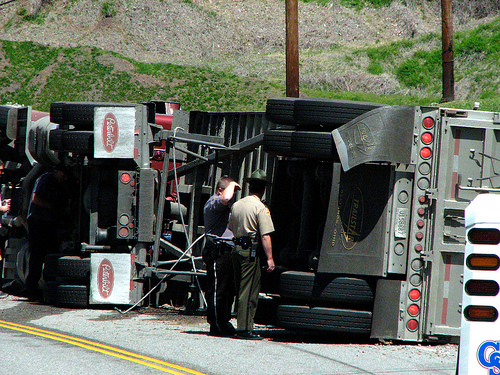
truck.jpgGood Georgia Truck Accident Lawyers praised the recent U.S. Transportation Secretary’s announcement that 109 commercial truck and bus drivers were removed from public roadways as a result of the Federal Motor Carrier Safety Administration’s annual alcohol and drug sweep this summer.

Said US Transportation Secretary Ray LaHood: “If you are a commercial driver or carrier operating in violation of federal drug and alcohol laws, we will remove you from our roadways.” Additionally, he stated: “Parents deserve to know their children are being driven by bus drivers who are drug and alcohol free, and every motorist deserves to feel confident that the drivers of large trucks and buses are safe and sober.”

The sweep was done by an investigation into the alcohol and drug safety records of all truck and other commercial drivers employed by bus and truck companies including hazardous material transporters, school bus drivers, interstate passenger carriers and general freight truck drivers.

The goals was to identify those offenders in violation of drug and alcohol testing and remove them from the road. The terrifying fact is that there are truck drivers who move from company to company just to evade the federal drug and alcohol testing and reporting requirements.

The Federal Motor Carrier Safety Administration warned that they are committed to ensuring that only safe truck drivers are allowed to operate. Unfortunately, there are truck drivers all over the country who have violated federal laws wreak havoc on public safety. Families all over Georgia have lost loved ones and been seriously injured due to the terrible negligence and criminal acts of truck drivers who recklessly take to the roads putting Georgians at risk.

If you know of someone who has suffered due to a truck driver’s negligent acts, Williams Oinonen LLC is committed to bringing justice to Georgians who have been injured due to truck driver negligence. Please call us today to discuss how we aggressively fight the trucking companies who break laws and negligently allow dangerous truck drivers on the road risking the lives of our loved ones.
Continue reading →

Published on:

truckytruck.jpgGeorgia Truck Accident Lawyers help you when your loved one has been injured or killed due to a trucking accident. One of the biggest reasons people die from horrible truck accidents is due to “driver fatigue”—because the truck driver has been driving for hours on little sleep. Unfortunately, truck drivers by law are allowed to drive up to 11 hours per day which for those of us who have driven that long, know that it can be exhausting and very difficult to do it for long periods of time.

Just last month, the Federal Motor Carrier Safety Administration submitted an important proposal for the new proposed truck driver hours of service rule. The details are unknown, but it is believed that the new laws will shorten the number of hours truckers are permitted to drive each day.

The trucking industry of course is concerned about losing money and is urging that the current 11 hour rule per day is allowed but public safety groups and consumer advocates are pushing for an eight hour day requirement.

Published on:

Good Georgia truck accident lawyers are essential to protecting your rights in a trucking accident where someone has been seriously injured or killed. In most personal injury trials in Georgia, mentioning the word “insurance” is the quickest way to a mistrial. This is unfortunate, because sometimes the jury doesn’t realize that the injured party is going after a big insurance company that is refusing to pay them and not really going after the negligent driver who may or may not have a lot of money in his bank account. Sadly, this can prejudice the jury into not awarding the injured party the real value of the case.

However, in trucking injury cases this rule changes. The beauty about trucking cases is that it is the one area of law where an injured party is able to not only mention the insurance company but actually sue the insurance company. The Georgia Supreme Court in the case of Grissom v Gleason, 262 Ga. 374 375 (1992), ruled that this Direct Action Statute does not unfairly prejudice the defendants by notifying the jury that insurance is available.

Thus, the Direct Action Statute, which falls under O.C.G.A. §46-7-12, allows injured parties in an accident with a motor carrier (such as a tractor trailer truck carrying passengers or loads) to not only mention the word “insurance” but to actually sue the insurance company as a party to the lawsuit.

Published on:

truck.jpgGood Georgia Truck Accident Lawyers can help you during a terrible truck accident. “How can I sue the truck driver and trucking company that killed or injured my loved one?” is question that none of us ever want to be faced with. It you are ever in that terrible predicament, is absolutely essential that you retain the services of a good Georgia lawyer immediately for one main reason: Trucking companies, similar to railroad companies are notorious for underhanded tactics when it comes to hiding the evidence in a trucking collision that has caused fatalities or serious injuries. Thus, it is essential that you have a good, trustworthy, competent attorney working on your side to fight against these tricks .

One of the first things a good Georgia lawyer will do in a situation involving trucking deaths and injuries will be to immediately send out spoiliation letters to preserve the evidence. For example, attorneys need to immediately request data from on-board recording devices, including ECM (electronic control module), any computer on board, or other recording device that was on the day of the accident and prior.

The “black boxes” are essential to help victims in their truck accident cases because the data is often able to provide evidence as to what actually was the causing factor in the collision. For example, “black boxes” often can be compared to the driver’s personal log to see if the truck drivers actual driving time doesn’t match up with what was actually recorded in the computer data.

If an attorney is not promptly hired on the scene, it is often the case that the trucking company will allow both the tractor trailer and the ECM black box to be destroyed.
Continue reading →

Published on:

Who provides the best opponent research for candidates entrenched in nail biting campaigns during this busy election season?

Williams Oinonen LLC is proud to be establishing a powerhouse reputation for going above and beyond. Rather than just providing you with cold data from public records, Williams Oinonen LLC puts together a plan on how to win.

What does one Senator, a highly satisfied client most recently say about us?

Published on:

Question.jpgShould I start an S corporation, or a limited liability company (LLC), or maybe a P.C., or maybe a limited partnership, or what about a C corporation? These are tough questions, tough choices. And regardless of where you’re located in Georgia (Atlanta, Athens, Rome, and so forth), If you are starting a business, one of the most important decisions you will make is what kind of company to form. Even for a single person small businesses, this is an important question. The type of legal structure you choose will have an impact on how much you pay in taxes, as well as your personal liability, and your ability to raise money and investors.

The three key things to keep in mind when choosing a business form are: liability, taxation, and ownership. Corporations and LLCs are legally separate entities from their owners. So, the shareholders or members are not personally responsible for the actions of the business. If something goes wrong, the company is sued, not the owners, and the company’s assets are at stake, not the personal assets of the owners. There are exceptions, but, generally, a corporate entity will protect the owners from personal liability.

Taxation issues should also be considered. As a separate legal entity, corporations are taxed as such. And so are the owners. This is double taxation. There are other forms of corporate entities, however, that have special pass-through tax rules. Pass- through taxation means that the owners of the business can take the gains or losses of the business on their personal tax returns.

Additionally, certain legal business forms limit the number or the type of people who can invest in the company. If you need to attract a large number of investors, or international investors, you need to find a corporate structure that allows for that.

The legal structures to consider are:

Sole Proprietorship or Partnership
The advantages of both of these forms is that there are no forms to file and no double taxation. You just start your business. These two forms, however, do not shield the owners from personal liability. If the company is sued, you will be personally responsible for its actions, and your personal assets are at risk.

Limited Liability Company

The LLC is a legal form which provides limited liability for the company’s owners, but does not require the same amount of formal filings as does the corporation. It has quickly become the choice for small businesses. An LLC offers personal liability protection to its owners as well as pass through taxation. It also allows for profits to be distributed unequally, allowing for more flexibility in tax planning and for rewarding owners who manage the day-to-day affairs of the company. The disadvantages are that you may are limited in transferring ownership and your tax liability could be higher, especially if you are the only member.

S Corporation

This is a corporation formed with the state, with an “S Election” filed with the IRS. It provides limited liability to its shareholders, but still allows for pass through taxation. Shares a often more transferable, and you can incentivize employees with stock options or bonuses. The number and type of investors are limited, however, and there are more filing formalities that need to be observed than with an LLC.

C Corporation

This is a corporation that allows for the most investors. There is limited liability for its owners. It is, however, subject to double taxation.

While many small businesses are interested in saving money and using online forms to form legal entities, it is important to discuss your goals with your attorney before selecting a corporate form. An attorney can help you choose the right form to fit your business today and ten years from now.
Continue reading →

Published on:

contract.jpg“Can I sue for a broken contract?” is a question many people asking when they need a good Georgia contract lawyer. Many times during contract disputes, clients often feel that “even though a particular obligation is not written within their contract with another person or entity, it’s common sense that that person or entity breached the contract by not performing a certain service, or acting a certain way.” Depending on what service, or what conduct, the client is referring to, he or she may have a point.

Over the years, Georgia courts have established that certain implied terms and duties may naturally flow from a contractual agreement, even if those implied terms and duties were not expressly written within the contract.

One of those implied duties is the duty of good faith and fair dealing, as Georgia courts have found: “[g]ood faith is, if anything, a minimum standard of conduct in any contract.” The term good faith has been found to mean “a shorthand way of saying substantial compliance with the spirit, and not merely the letter, of the contract.” That means that contrary to what many feel, the implied duty of good faith and fair dealing relates to the performance of a contract and not to the conduct that induced a person to enter into a contract. (Although if you were tricked into signing a contract you may have a claim against the person for fraud, amongst other claims.)

In addition, what’s important to understand about the implied duty of good faith and fair dealing is that determining what conduct constitutes good faith and fair dealing will depend on the facts of your case. You should also be mindful that an implied duty such as that of good faith and fair dealing cannot contradict an express term of a contract, and must be an “inference absolutely necessary to ensure that the intentions of the parties regarding the contract is respected.” In Georgia, this standard is not an easy one to meet and is strongly fact driven with respect to the language of the contract and the circumstances upon which the contract was entered.

Georgia Courts have been able to use the implied duty of good faith and fair dealing to find terms that were not expressed in the parties agreement in order to cure defects in contracts. This may or may not be advantageous to you, depending on your conduct.

What is certainly advantageous to you, however, is finding a good lawyer to deal with your contract dispute and issues.
Continue reading →

Contact Information