Published on:

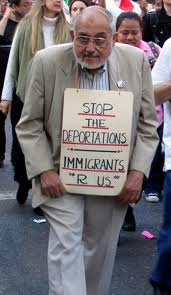
Immigration Image Depo.jpgWhat happens if you get wrongfully deported from the United States while you are the legal guardian of a child lawfully living in the United States? Today we are going to discuss a real life case and what the implications mean for you.

In the immigration case Macario Moreno-Morante v. Alberto R. Gonzales, a U.S. Court addressed the following question: Can a non-citizen grandparent (“Mr. Macario”) be considered a “qualifying relative” in order to be eligible to cancel his deportation (formally known as cancellation of removal), because the grandparent is the legal guardian/custodian of his grandchild (who is a United States citizen?)

The court addressed this question because the Bureau of Immigration Appeals (“BIA”) denied Mr. Macario’s application to cancel his deportation (formally known as an application for cancellation of removal): the BIA agreed with an Immigration Judge that Mr. Macario’s grandchild was not his child within the meaning of relevant deportation law. The BIA made that decision regardless of the fact that Mr. Macario was his grandchild’s legal guardian/custodian and was in the process of adopting his grandchild. Importantly, no one disputed the fact that for all purposes, Mr. Macario provided for his grandchild as if his grandchild were his own child.

First, let’s lay out the law that applies to this discussion: The law states: “to be eligible for cancellation of removal (deportation), a nonpermanent resident (Mr. Macario) must establish, amongst other things, that “removal would result in exceptional and extremely unusual hardship to the aliens spouse, parent, or child who is a citizen of the United States or an alien lawfully admitted for permanent residence.” That means that Mr. Macario must show that his removal (deportation) would result in exceptional and extremely unusual hardship to his grandchild, who Mr. Macario has legal custody of.

However, the court never addressed whether or not deporting Mr. Macario would result in exceptional and extremely unusual hardship to his grandchild who he had legal guardianship of, because the court found that Mr. Macario was not a qualifying relative of the child to begin with.

The problem for the Court seemed to be that at the time of Mr. Macario challenged his deportation, he had not formally adopted his grandchild. So the Court stated that the obvious fact that the Mr. Macario acted as the child’s parent was not enough. Rather, Mr. Macario had to be the legal parent of the child. What does that mean? Simply put, being the legal guardian and custodian of a child is not enough to submit a successful application to cancel your deportation, even though it may be obvious that if you leave the country, the “child” will suffer.

In fairness, the Court recognized the harsh and unfair consequences of its ruling. However, the Court said it did not have the power to change what Congress intended; in order to qualify for hardship to be suffered by a child, that child must meet the detailed and clear definition of a child in accordance with immigration laws. The sad reality is that being a legal guardian/custodian is not enough to meet that definition.

Importantly, the Court also sent a clear message to Congress that Congress has the authority to undue the harsh reality of these types of situations, by reforming the definition of “child” found in immigration laws. To date, Congress, unfortunately, has done nothing.

Challenging deportation requires you to find a good lawyer because the process is long and can be tricky.
Continue reading →

Published on:

Here is a very enjoyable, entertaining clip which explains why lawyers are so vital to helping protect those who are injured or harmed by wrongs and injustices. Good Georgia Lawyer is a proud member of the Georgia Trial Lawyers Association and thanks them for this special video:


Published on:

rat.jpgContaminated food can cause injury or even death to consumers and cause expensive, costly lawsuits to sellers, making it very important that food is produced and stored in sanitary conditions. Yesterday federal agents seized food products from a rat infested warehouse in East Point Georgia, owned by the United Food Service Company. Close to one million dollars of contaminated food was confiscated.

U.S. Attorneys issued a statement stating: “The insanitary conditions alleged to exist in this warehouse where food is stored are simply unacceptable,” and that “This office has moved quickly to prevent the FDA-regulated products stored in this rodent-infested warehouse from being sold to unsuspecting consumers.

According to authorities, the Food and Drug Administration inspected the warehouse and documented an active and widespread rodent infestation, photographing and videotaping multiple live rats, dead rats, and rat nesting sites.

In Georgia, liability for knowingly or negligently selling unwholesome provisions has been imposed by statute since 1863. The seller has a duty to know the condition of the food that he sells, because contaminated food can seriously injure or even kill a consumer. And because the seller is in the best position to know the food, he is the one who will be held liable.

The plaintiff does have a duty to exercise ordinary care to avoid getting injured by consuming the bad food. The plaintiff must prove that the food was unwholesome and this is not established by the mere fact that the plaintiff became sick after eating it. However recovery is possible based on circumstantial evidence that rules out every other reasonable hypothesis that could be an explanation for his or her illness.
Continue reading →

Published on:

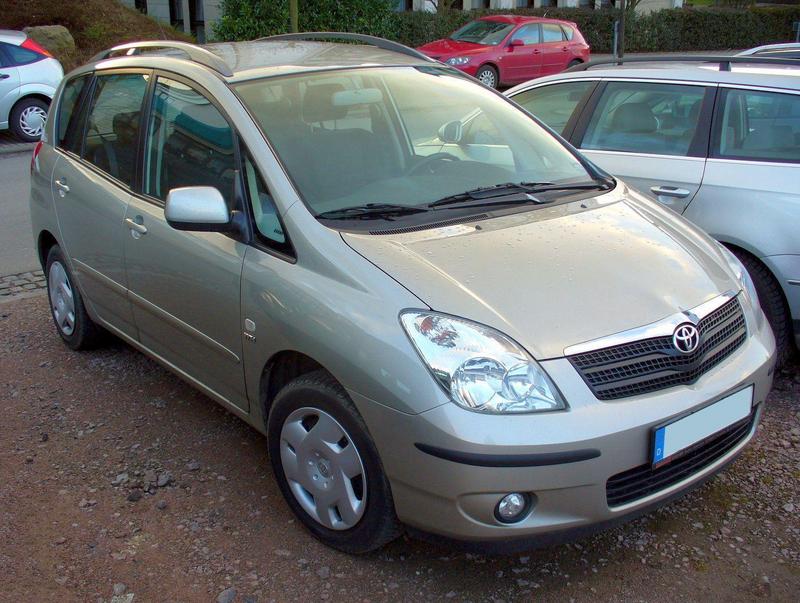
Thumbnail image for Toyota_Corolla_Verso.JPGInjuries or deaths are caused each year by SUV rollovers, faulty airbags, bad brakes, and more. Just this past year Toyota has recalled over 10 million cars and trucks all over the world for a variety of problems that included floor mats that trapped accelerators, brake problems, and faulty gas pedals.

Unfortunately for Toyota consumers, the misfortune continues as they recently announced a new recall of 1.53 million Lexus, Avalon and other models, mostly in the United States and Japan for fuel pump and brake fluid problems.

Toyota announced today that it would call back 740,000 cars in the U.S. alone. Just two months ago, Toyota recalled 1.33 million Corolla and Matrixs, bringing the total around 10 million. hatchbacks in the U.S. and Canada

In Georgia, automobile manufacturers like Ford, Toyota, or Lexus would be held strictly liable in products liability torts action. The Georgia legislature drafted these laws in order to protect consumers by shifting the burden of the loss or injury to the wrongdoer, i.e. the manufacturer of the product defect that caused the harm. The basic elements of this legal claim are: first, the manufacture of the product (Toyota manufactured the cars); second, a defective product (the vehicles are in fact defective hence the recalls); third, an injury to a natural person proximately caused by the defect (multiple automobile owners have suffered harms due to defects); fourth, a sale of the product as a new product (Toyota dealers sold these new vehicles off their dealership lots); and fifth, the existence of the defect at the time the product left the manufacturer’s control (the defect was present when Toyota sold the car to consumers.)
Continue reading →

Published on:

strollers.jpg

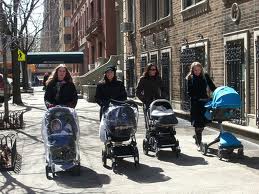
Two million strollers from the Atlanta-based Graco Children’s Products Inc. are being recalled because of strangulation and entrapment risks.

The recall comes after four strangulation deaths have resulted from the strollers. Children also have become trapped in the strollers and injured with cuts and bruises. Infants who have not been harnessed have slipped through the opening between the seat’s bottom and tray, and the infant’s neck has become entrapped and strangled.

The recall includes older versions of Graco’s Quattro Tour and MetroLite Strollers and travel systems sold between November 2000 and December 2007.

The strollers were sold all across the country at stores including: Kmart, Walmart, Target, Sears, Babies ‘R’ Us, Burlington Coat Factory, Meijers and Sears.

For more information about the recall and to find out the specific models visit: http://www.cpsc.gov/cpscpub/prerel/prhtml11/11015.html
To avoid stroller injuries, make sure that you do not use recalled strollers and always make sure your child is strapped in properly. If babies aren’t strapped into the strollers carefully, they can slip through the opening between the stroller tray and bottom of the seat — where they can get stuck and be strangled.
Continue reading →

Published on:

How do you protect your business brand name and trademark? Naming a business or a product is usually one of the more fun parts of a startup. It might be time consuming, but when you come up with the perfect name for your company or product, it’s much more satisfying than filing incorporation paperwork. Once you have that name, it’s important to protect it.

The first step in protecting your name is to make sure no one else is using it. You want to protect your business from an expensive trademark suit by another company.
You should conduct a full search to make sure no one else is using the name. It is crucial to make sure no one is using the name in your industry or any other related industries. Do a google search of your name. Check the trademark filings with the US Patent and Trademark Office Check the trade name registrations with the Georgia Secretary of State , and with the Secretary of State of states in which you plan to sell your product. Conducting as full a search as you can will save you from being sued for infringement by someone who was using the name first.

You can also pay for a trademark service to do the search for you. While these services are expensive, they are fairly comprehensive and can give you peace of mind that no one else is using your name.

The next step in protecting your brand and product is to register your trademark with the US PTO and your state registry. Registration gives you the exclusive rights to use your name without interference and confusion by use of anyone else, and to sue for damages in federal court if anyone else does use your name. Federal registration presumptively establishes that the trademark is valid, and that you are the owner of the mark, which is not confusingly similar to any other registered mark. This gives you an advantage in any litigation, shifting the burden of proof to infringers or potential infringers to prove that the presumptions are incorrect. The owners of unregistered marks first have to prove the validity of the mark, ownership, and first use.

This protection is quite beneficial when building a brand. While you may not want to pay the fees to register each product name, you should register your brand name, as well as any product names that are gaining in popularity.
Continue reading →

Published on:

How can I protect my company’s secret information making sure my employees keep it confidential? This is a question that we are often asked by business owners in Georgia.

You established your business because you have a great product, technology, or service. You want to tell the world about it, but it is also important to protect your idea from competitors, particularly in the development stages of your business.

When you are looking for investors, working with others to develop a product, or otherwise turning your idea into a business, it is important to be careful about sharing information. You do not want to disclose confidential information and have it land in the hands of your competitors or be used against your interests.

Published on:

Thumbnail image for Thumbnail image for Question.jpgChoosing a business form is one of the most important decision any small business owner makes when starting a company. In order to protect yourself from personal liability, it is important to create a separate business entity with the Secretary of State. But, which one should you choose? We are going to address briefly the difference between an LLC and S Corporation, so you can get an idea of some vital distinctions.

Subchapter S corporations, also known as S corporations, are very similar to LLCs. There are certain factors in any given business that lends itself better to an S Corporation or an LLC. The factors to keep in mind are: the number of initial owners, the need to attract other investors, how profits will be allocated, and taxation issues.

Both S Corporations and LLCs offer the owners limited liability protection, and are both pass-through tax entities. Pass-through taxation allows the owners of the company to take the gains or losses generated by the company on their personal tax returns. It is a special tax status that eliminates the double taxation that owners of corporations are subject to.

But, S Corporations and LLC are also very different. The ownership of an S Corporation is restricted to no more than 75 shareholders, it cannot be owned by non-US citizens, other corporations, many trusts, LLC, or partnerships. LLCs do not have these ownership restrictions.

S Corporations, however, can exists perpetually, while LLCs usually have limited life spans. The stock of S Corporations is more freely transferable than the membership interests of an LLC. S Corporations are also usually more beneficial for self-employment taxes.

You need a good lawyer to evaluate your needs and help you navigate through the legal quagmire inherent in forming and operating corporations. You must have a firm understanding of basic corporation law in order to protect your personal and professional interest.
Continue reading →

Published on:

College_graduate_students.jpg
College rape and sexual assault lawyers at our firm advise that college students raped on campus can sue their college for negligence in failing to prevent a foreseeable crime. Most recently, the Department of Justice just came out with a recent study that 25 percent of college women, or 1 out of 4 college women, will be victims of rape or attempted rape before they graduate within a four-year college period, and that women between the ages of 16 to 24 will experience rape at a rate that’s four times higher than the assault rate of all women.

Colleges and universities have a legal duty to warn students of known dangers and to provide reasonable protection. If a crime is foreseeable, then a college can be held liable for not sufficiently protecting against it.

For example, at one highly respected university, a male student admitted to the Office of Student Affairs judicial officer that he had raped a fellow female student on the college campus. The Office of Student Affairs judicial officer showed unbelievable stupidity by failing to expel the student immediately, choosing rather to put him on probation and removing him to a separate dorm. The young woman who had been raped suffered serious psychological trama at the university’s handling of the situation, especially now that she was forced to face her rapist everyday on campus. Her grades quickly plummeted and she withdrew from the university the following semester.

This true story gets much worse however, because the male student rapist felt he had received a carte blanche pass to continue his predatory activities, since the university had chosen to only slap him on the wrist as a punishment for his admitted rape. Consequently, he continued his sexual deviant behavior directed towards other women on campus.

After more and more young female students came forward to report their fears about his stalking and other predatory behaviors, a scandal erupted as a whistleblower came forward to disclose that someone in the student affairs department had knowledge as to his previous misconduct and failed to punish him for actually admitting rape.

The most shocking aspect about this story isn’t only that it is true: rather that it happens all too often on college campuses. Oftentimes, universities and colleges are fearful of turning in their students to the authorities or even responding appropriately to a campus rape. Vice Presidents who are responsible for reporting the numbers of sexual assaults on campus pursuant to the Clery Act can feel pressured by the powers that be to minimize those reports, and often take the brunt of the blame for any unsafe environment occurring on campus. Additionally, judicial officers who are put in charge of handling such disciplinary proceedings are often not properly trained on sexual assault laws or appropriate rape counseling response.

This culture of silence and cover up is also created by university administrators reluctant to report the crime as required by federal law out of fear of the negative publicity and PR problem that may affect their enrollment numbers if the perception is created that their campus is unsafe.

The pressure to quash a rape incident can come up from a Director or Vice President to as high as the Board of Trustees or Board of Regents that oversees the President of the university. Additionally, universities sometimes act more fearful of being sued by the student charged with the rape, rather than the more likely event that the university will be sued by the rape victim because of the university’s own negligence in permitting a foreseeable danger to occur.

The irony of all of this is that in terms of risk management, failure to properly respond to sexual assault is one of the riskiest mistakes a universities can make. By permitting a culture where students are not educated on rape awareness, where sexual assault is silenced and rapes are covered up, and where sex assault is not treated with ‘zero tolerance;’ —universities become “aiders and abettors” and will be held responsible for their negligence in failing to warn or prevent students from a harmful, foreseeable danger.

This not only puts students’ safety at risk but creates the worst kind of public relations nightmare possible—practically insuring that the institution will be found liable for hundreds of thousands of dollars in damages from tort claims and bad publicity because of a failure to do the right thing.

Williams Oinonen LLC represents college students who have been raped or sexually assaulted on campus. Williams Oinonen LLC also offers preventative training on this issue and provides consulting workshops to university staff and faculty on all legal issues within education.
Continue reading →

Contact Information