 Georgia Injury Lawyer Blog


The law under O.C.G.A. §33-24-56.1 is very specific as to when your health insurance benefits provider can obtain reimbursement from your personal injury settlement due to the health benefits they provided you because of the injury. The law states that your health insurance benefits provider can only obtain reimbursement it has paid on account of the injury up to the amount allocated to those categories of damages in the settlement documents or judgment if they meet the following:
“1)The amount of the recovery exceeds the sum of all economic and noneconomic losses incurred as a result of the injury, exclusive of losses for which reimbursement may be sought under this Code section; and
2) The amount of the reimbursement claim is reduced by the pro rata amount of the attorney’s fees and expenses of litigation incurred by the injured party in bringing the claim.”
What does this mean for you? It means that only if an insurance company can prove that you have been fully compensated: “made whole” are they able to recover reimbursement. Here is an example to illustrate: let’s say you recovered $200,000 in a settlement for your personal injury claim, let’s also say the sum of all your economic and noneconomic losses totaled $300,000, and the insurance company paid $50000 in your medical bills for your injury which they are now seeking reimbursement. In this situation, the insurance company cannot go after your settlement money to get reimbursement because the sum of your recovery ($200,000) did not exceed your total economic and noneconomic losses, exclusive of losses for which reimbursement may be sought ($300,000-$50,000= $250,000).
However, if it did, we would then jump to the second prong of the statute which states that the amount of reimbursement still must be reduced “by the pro rata amount of the attorney’s fees and expenses of litigation incurred by the injured party in bringing the claim.”
Continue reading →
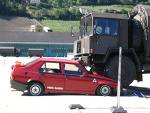 A tractor trailer truck weighing over 47,000 pounds struck Georgian Methodist minister Rev. Joseph Roberson’s automobile, tragically ending his life. The Reverend was driving in South Georgia when he drove past an unseeable stop sign on Poor Robin Road and crossed over a highway where he was struck and killed. Georgia State Patrol stated that the stop sign on the road had been lying on the ground. Roberson drove past the downed sign in his 2009 Honda Accord, crossing the northbound lanes of Highway 21 where a southbound tractor trailer struck his car on the passenger side causing fatal injuries.