Published on:

pills.jpgHundreds of patients who have taken Avandia, a drug for diabetes, needlessly suffer heart attacks and heart failure every month, determined by confidential government reports recommending the drug be taken off the market.

Dr. David Graham and Dr. Kate Gelperin of the Food and Drug Administration and authors of these reports, recommended that Avandia be withdrawn. The battle has been brewing for years but has been brought to a head by disagreement over a new clinical trial and a Senate investigation that concluded that GlaxoSmithKline should have warned patients earlier of the drug’s potential risks.

In 2008, the United States Supreme Court heard the groundbreaking case, Wyeth v. Levine, and held that Federal regulatory approval of a medication does not shield the manufacturer from liability under state law. Wyeth v. Levine 129 S. Ct. 1187 (2008).

Under Georgia State law, a drug manufacture like GlaxoSmithKline may be liable for a failure to warn adequately of known or reasonably foreseeable dangers in the use of the drug.
Continue reading →

Published on:

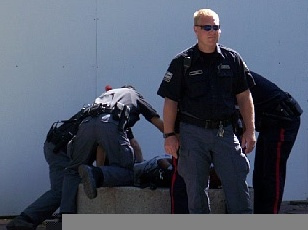
police.jpgLast month the Eleventh Circuit Court of Appeals denied two Florida police officers motion for summary judgment on qualified immunity grounds. Sanchez v. Hialeah Police Dep’t, 2009 U.S. App. LEXIS 27607 (11th Cir. Fla. Dec. 16, 2009)

A young man, Erik Sanchez, had sued them in federal court, pursuant to 42 U.S.C. §1983. In his suit he contended that the City of Hialeah Police Officer Del Nodal had violated his Fourth Amendment right to be free from excessive force by repeatedly striking him in the head with a baton and that fellow Officer Garrido failed to intervene. The Court of Appeals affirmed the district court’s denial of qualified immunity for the police.

The position Officer Del Nodal argued was that his reaction was objectively reasonable when he opened the car door, punched Sanchez in the eye, and sprayed him with mace after Sanchez broke the police car window. However, as Erik Sanchez, a minor at the time of the attack explained, Officer Garrido pulled Sanchez from the car, ordered him to the ground filled with broken glass, and repeatedly struck him with a baton after macing him. Sanchez also alleges that Officer Del Nodal of striking him 10 times with his baton — with 5 blows going to his head — resulting in at least two head lacerations requiring 15 metal staples to close, causing heart abnormalities, and life threatening injuries.

The Court of Appeals ruled that a jury, taking the facts in a light most favorable to Sanchez, could reasonably find that Officer Del Nodal violated Sanchez’s right to be free from excessive force and that qualified immunity does not apply.

Under the law of analyzing the applicability of qualified immunity, the Court has at its disposal a two-step process. Traditionally, a court first determines whether the officer’s conduct amounted to a constitutional violation. Second, the court analyzes whether the right violated was clearly established at the time of the violation.

The Court in this particular case analyzed the claim of excessive force under the Fourth Amendment’s ‘objective reasonableness’ standard.” Thus, the question was whether the officer’s conduct is objectively reasonable in light of the facts confronting the officer. Determining whether the force used to effect a particular seizure is ‘reasonable’ under the Fourth Amendment requires a careful balancing of the nature and quality of the intrusion on the individual’s Fourth Amendment interests against the countervailing governmental interests at stake.

The Court explained that the analysis requires careful attention to the facts and circumstances of each particular case, including the severity of the crime at issue, whether the suspect poses an immediate threat to the safety of the officers or others, and whether he is actively resisting arrest or attempting to evade arrest by flight. Additional considerations include: (1) the need for the application of force, (2) the relationship between the need and the amount of force used, (3) the extent of the injury inflicted and, (4) whether the force was applied in good faith or maliciously and sadistically. Hadley v. Gutierrez, 526 F.3d 1324, 1329 (11th Cir. 2008)

Notably, the Court of Appeals explained that they consistently have allowed an excessive force claim to go forward where an arrestee was handcuffed, posed no risk of danger to the officer, and was not resisting arrest. Sanchez v. Hialeah Police Dep’t, 2009 U.S. App. LEXIS 27607 (11th Cir. Fla. Dec. 16, 2009)
Continue reading →

Published on:

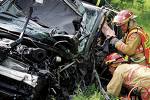
north georgia mts.jpgVery tragically, two people were killed yesterday in northeast Georgia in fatal car accidents. A 47 year old woman of Homer, died after her car crossed the center line and hit another car on Georgia 51. This occurred near Homer, in Banks County just before five o’clock. Five other people were injured in the crash.

Earlier that afternoon a 73-year-old died in a one-car accident near Dawsonville. Georgia State Patrol says reported that the victim was in an automobile that left Hubbardsville Road and collided with a tree.

The loss of a loved one due to a tragic accident is one of the most difficult things families can face. To add insult to injury, it is unfortunate that so many insurance companies fail to compensate the victim and victim’s family without a fight.

In the typical Georgia automobile policy, an insurance company agrees to pay money for that which the insured driver becomes legally obligated to pay in damages such as bodily injury, sickness or death.

Bodily injuries covered includes the broad range of physical and mental injuries for which one can recover compensation for under the tort law of the state. This could include physical injuries, mental distress, lost wages, medical expenses, liability to a spouse for loss of consortium, and general damages for pain and suffering.

Generally and unfortunately however, insurance companies never pay the full amount of compensation for a person’s injuries. The insurance adjuster who contacts the injured person or injured person’s family member often have an objective to get them to settle for the lowest amount of money possible.

This not only hurts the injured person and their family, but also the insured driver whose negligence caused the injuries. And when accidents happen, everyone wants their insurance company to adequately represent them if they are at fault. Yet if an insurance company doesn’t cover their insured driver properly and the driver ends up being found liable for causing injuries, it is the driver at fault who will be personally liable for the excess amount of the judgment that is not covered by the insurance policy.

Fortunately however, Georgia law protects insured drivers by punishing insurance companies who act in bad faith. Georgia courts have ruled that the insurance company is liable for an excess judgment if it is guilty of bad faith, fraud, or negligence in failing to settle within the policy limited. Allstate Ins. Co. v. Harris, 133 Ga. App. 567 (1974). Georgia courts also now require that the insurance company give equal consideration to the insured driver’s financial interest as to their own. Southern General Ins. Co. v. Holt, 262 Ga. 267 (1992).
Continue reading →

Published on:

Pit Bull.jpgDid you know that almost every minute of the day, someone has to be treated for a dog related injury? It’s true. Dogs bite people, often. The question for you, and probably the reason why you are reading this article, is: can I recovery from the owner of the dog that bit me? In Georgia, the answer is not as simple as you may think. Just because a dog bites you doesn’t mean that you can recover. Although complicated, these are few details to consider.

For years, Georgia law has provided owners with a way out: the first bite rule. The courts considered two things. First, did the dog exhibit the propensity to bite or attack before the incident occurred? Second, did the owner have knowledge of the dog’s vicious propensity to attack? If the answer to either of those questions was no, then there stood a good chance that, in Georgia, you could not recover for your injuries. The courts basically reasoned that owners should not be held liable for an unforeseen and unforeseeable act of his dog just because the dog was not in his immediate control. The times and the law however have changed.

In 2010, the first-bite rule has some exceptions, and lawyers have developed crafty ways to get there clients the compensation they deserve for their injuries. A legislative change to Georgia law is that, now, a violation of a local leash law ordinance, or another ordinance designed to protect the public from an “at-large” dog such as restrictive ordinances designed to keep dogs confined, may be sufficient to overcome the “vicious propensity” standard found in Georgia law. Around 1985, Georgia lawmakers decided that it was just too irrational that an owner violate a leash law and still escape liability because of the vicious propensity rule. However, addressing leash laws and other ordinances is not so straightforward and requires the knowledge of a good attorney.

In addition, new case law indicates that courts may consider whether the owner had prior knowledge of her dog’s tendency to attack someone and superior knowledge of her dog’s tendency. This standard, if used by a court, provides much more “wiggle” room than the vicious propensity standard, for a seasoned attorney to make your case and win compensation for your injuries.

Furthermore, you should also consider a new route that many lawyers have taken to advocate strongly for clients who have suffered injuries inflicted by a dog attack: negligent undertaking. Basically, if an owner agrees to restrain his dog before you come onto his property and fails to do so, then a court may find that the owner is liable even if the dog had shown no prior vicious propensity.

Lastly, did you know that even if a person did not own the dog that bit/attacked you, that person may be held liable if she had undertaken to “care” for the dog and while caring for that dog, the owner violated a dog-related ordinance or applicable law? Or did you know that when a dog is part wolf or wild animal, the owner will be held strictly liable, meaning you or your attorney do not have to prove “vicious propensity” or even “superior knowledge.”

As you can see, dog bite cases are complex. The point of this article is to show you that in order to maximize your recovery for a dog-related injury, you need a good lawyer who knows this area of law; ultimately your case, your recovery, depends on how well your lawyer can apply the facts of your situation to the nuances of Georgia law, to either win in court or deal effectively with insurance companies who want to pay you little-to-nothing for your injuries.
Continue reading →

Published on:

SUV.jpgWhen the National Highway Safety Transportation Administration (NHTSA) first came into being, automakers were heavily regulated as then head of NHTSA, Joan Claybrook, a Ralph Nader protégé, went after dangerous vehicles like the Ford Pinto. Claybrook, who has been aptly described as the “most ardent champion of consumer protection and the common good,” has spent most of her life working to save the American consumer from one of the most significant dangers on the market today: SUV rollovers.

Recently retired as president of the consumer rights advocacy group Public Citizen, she has worked on auto safety issues for over forty years and was the head of the National Highway Transportation Safety Administration during the Carter administration.

Scientifically, Claybrook explains that rollover crashes should be well survivable: “Forces felt by an occupant who has a rollover pretention restrain and who does not contact the roof are not as violent as those experienced in a frontal impact crash.”

Claybrook asserts that the physics of rollover crashes are indisputable. In her testimony before the Senate Committee on Commerce, Science and Transportation in 2008, she explained the elements of a rollover: “Rollover crashes occur over a 4-6 second time interval, whereas other crashes are over milliseconds. Consequently, the forces acting on occupants are relatively mild and the focus becomes threefold: (1) whether the restraint properly and safely keeps the occupant in the survival zone of the vehicle; (2) whether the vehicle structure maintains the occupant survival space; and (3) whether the portals of ejection, e.g., side windows, stay intact thus preventing exposure to partial ejection.”

Yet despite the fact that rollover fatalities can and should be avoidable, there has been a long history of the American auto industry resisting safety standards that would mitigate such fatalities. Additionally, “in this era of active products liability litigation and frequent media coverage of product safety issues, it is surprising that one kind of product-related accident has caused thousands of avoidable deaths and injuries but has received virtually no legal attention.”
Continue reading →

Published on:

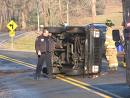
Thumbnail image for rollover.jpgThe alarming fact is that each year, more than 10,500 people die in SUV rollovers, and another 24,000 to 30,000 are seriously injured. And, families will keep being torn apart until the National Highway Traffic Safety Administration enforces a “comprehensive dynamic rollover standard that covers belt performance, door and glazing retention, and roof crush” and enforces adequate roof crush testing.

Several decades ago, rollover crashes were few: in 1969 there were just 1,400 deaths in rollover crashes because pickups were primarily driven as work vehicles and the SUV was not yet marketed as a passenger-carrying vehicle. But over the course of the latter end of the 20th century, the auto industry commenced on a strategic advertising campaign to convince the public that SUV’s were “the station wagon of the future.” Thus, a product originally suited for off-roading, outdoors terrain, became a ubiquitous sight driven by everyone from hip hop stars to soccer moms on urban freeways and suburban cul-de-sacs across America. As a result of this, families are losing loved ones at a rate of over 10,000 per year.

Starting almost two decades ago, the influential Insurance Institute for Highway Safety (IIHS) alerted the industry that utility vehicles were rolling over at five times the rate of passenger cars. Currently, although rollovers account for less than three percent of passenger vehicles in all police-reported crashes, they make up about twenty three percent of passenger vehicles in fatal crashes. The National Highway Traffic Safety Administration’s latest report documents that in 2007, there were 10,194 fatalities in rollover crashes, accounting for approximately 1/3 of all highway occupant fatalities.” As of this year, “motor vehicle accidents are the number one killer of people aged 3 to 33, and rollover crashes account for a disproportionate and unnecessary number of these deaths.”

Why are SUV rollovers so deadly? The primary reason lies with the design of the vehicle. The narrow wheel base and a high center of gravity, gives them the propensity to ‘trip’ even at a low rate of speed when it grazes a curb, slightly swerves or hits a soft shoulder. However the most fatal feature of the SUV occurs from the result of the rollover: roof-crush. Without roll bars or other reinforcement, the top of the SUV roof crushes down on the heads and necks of the passengers when the full weight of the vehicle lands on it. When that happens, fatal consequences occur.

If the roof is too weak, the vehicle support pillars will collapse, crushing the roof and doors, including areas which hold the seat belt mechanism in place. The doors and roof, pushed down like an accordion, will cause the seatbelts (attached to the top of the roof and window) to break, no longer holding the passenger in place. Additionally, the crushing roof will cause the windshield and side windows to break open, creating portals where occupants, without the protection of working seatbelts, will be ejected. Consequently, two outcomes generally occur: either the passengers will be fatally ejected from the vehicle; or the roof will crush down onto the heads and spine of those trapped inside.

Despite these risks, the auto industry refused for decades to reinforce roofs or even acknowledge the deadly dangers of roof crush despite pleas from numerous consumer rights groups. Furthermore, over the past several decades despite empirical evidence to the contrary, the auto industry systematically denied the dangers of roof-crush and deliberately pressured federal regulators and lawmakers to otherwise protect the public from this avoidable product design.
Continue reading →

Published on:

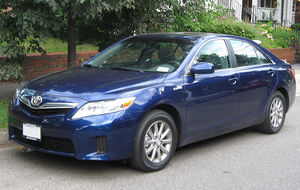
Thumbnail image for Camry.jpgYesterday the United States Transportation Secretary Ray LaHood warned owners of recalled Toyotas to immediately stop driving their vehicles and take them into the Toyota dealership for immediate repair.

Mr. LaHood testified before Congress that Toyota was slow to address the safety problems with its gas pedals and it took pressure from the U.S. government that forced Toyotal to recall millions of its vehicles.

LaHood described Toyota as being “a little safety deaf” during the investigation and reported that Toyota was so resistant that it took federal safety officials from the U.S. government travelling to Japan to “wake them up” to the very seriousness of the danger.

Lahood further reported to Congress that the recall occurred because of the National Highway Traffic Safety Administration, the federal government agency that worked to protect consumers from these dangerous vehicles by meeting with the top officials of Toyota in Japan.

LaHood also stated that the U.S. government considered civil penalties to Toyota but would not provide specifics. Former NHTSA administrator Joan Claybrook said Toyota has been resistant to regulation for a long time and been extremely secretive.

On Monday Toyota apologized about the problem and announced a repair which will insert a steel piece into the gas pedal to resolve excess friction that can cause the pedal to become stuck.

Federal data show these complaints against Toyota have doubled last year alone.
A government survey of Lexus owners found dozens of reports owners pressing hard on the brakes but failing to stop the sudden acceleration of their vehicles. This led to a Toyotal recall for 55,000 Lexus vehicles in 2007. Then in August a California Highway Patrol officer and his family were killed in a high-speed crash aboard a 2009 Lexus ES350 which hit speeds exceeding 120 mph, struck another SUV vehicle, drove off an embankment, rolled several times, and exploded in flames while a family member was calling 911.

Since that time, there are increasing reports of runaway acceleration Toyota and Lexus vehicles not on the recall list. In October, Toyota recalled more than 4 million vehicles and the recall has since grown to more than 5 million vehicles. Congress has now launched an investigation into the risk to the public and federal safety officials are widening their investigation of Toyota’s sticky gas pedals.

In Georgia, Toyota manufacturers would be held strictly liable for claims in these defective product actions. The law in Georgia seeks to protect the consumer by shifting the burden of the loss to the wrongdoer, i.e. the manufacturer of the defective product that caused the injuries. The essential elements of this legal claim are: first, the manufacture of the product (Toyota manufactured the cars); second, a defective product (the vehicles are in fact defective hence the recalls); third, an injury to a natural person proximately caused by the defect (multiple Toyota owners suffered injuries due to this defect); fourth, a sale of the product as a new product (Toyota dealers sold these new vehicles off their dealership lots); and fifth, the existence of the defect at the time the product left the manufacturer’s control (the defect was present when Toyota sold the car to consumers.)
Continue reading →

Published on:

checkbook.jpgNaturally, when someone owes you money and sends you a check for less than the amount owed, many people feel that they should be able to cash the check and still collect the rest of the money owed to them. But what if you were sent a check that said “paid in full” (or something to that effect), and you cashed it? Could you still collect the rest of the money you’re owed? In Georgia, the answer is tricky, and you need a good lawyer to help you deal with this situation.

Briefly, if you cash a check for less than the amount owed to you and that check has “paid in full” written on it, you do not necessarily lose your right to the rest of your owed money. Several factors come into play. For example, do the facts of your case demonstrate that you and the other party disagree about the amount owed? If the answer is yes, and you cash a check for less than the amount owed to you, then you may have extinguished your legal right to the rest of your money, even if the check does not have conditional language such as paid in full written on it.

To the contrary, if no dispute exists, then cashing a check that is for less than the amount owed to you may not extinguish your legal right to the rest of your money, even if the check has conditional language such as paid in full written on it.

As said, the situation can be complex and involves much more than the above-mentioned scenarios. The facts of your case as applied to Georgia law will determine the claims you have against the other party.
Continue reading →

Published on:

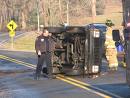
rollover.jpgWarner Robins police reported that 19 year old Jabrial Odeal Adams rolled his car and was found walking near the scene of the accident around 12:15 a.m. this past Sunday.

Three passengers were all at the scene of the accident when police arrived: 18-year-old Earrion Down and 26-year-old Elvina Dowl, both of Warner Robins, and 18-year-old Darlessa West of Cochran. Elvina Dowl suffered a concussion and cuts on her face and was taken to the hospital. West and Earrion Dowl were treated at the scene and released.

Generally, under Georgia law, a typical automobile liability policy will require the insurance company to pay for any damages the insured driver would be legally obligated to pay as damages for bodily injury that results from the use of his insured automobile.

Injuries covered under an automobile liability policy include the range of physical and mental injuries compensable. Under the tort law of the state of Georgia this includes bodily harm, mental distress, lost wages, medical expenses, and general damages for pain and suffering.

The passengers in Sunday’s accident are no doubt lucky to be alive after experiencing a rollover accident. One of the most dangerous types of injuries that are often encountered in these types of rollover automobile accidents are traumatic brain injuries or TBI. Traumatic brain injuries occur when there is a sudden physical force to the head such as in an automobile rollover. There are over one million traumatic brain injuries that are suffered each year alone, many of them turning fatal or having irreversible effects.

While traumatic brain injuries often happen with slip and falls, the second largest amount are made up from motor vehicle accidents. Additionally, teenagers between the ages of 15 and 19 suffer the highest risk of receiving a traumatic brain injury. Many experts believe the correlation occurs because it happens to be the age when many young people begin to drive.

However, this correlation between traumatic brain injury and young drivers can often be avoided with proper education and safe driving habits. We need to make certain that our young people in Georgia are trained to avoid texting, speeding, alcohol, and drug use while driving.
Continue reading →

Published on:

police.jpgTwo New York Officers were suspended recently when a videotape surfaced displaying them beating a handcuffed suspect. The video was shot by a witness looking out an apartment window in the Bronx on January 5th.

Police Commissioner Raymond Kelly said he decided to suspend the officers as soon as he viewed the video: “We simply are never going to tolerate something like that,” Kelly said. “We are going to take swift and firm action when we see activities of that nature.”

A federal statute known as Section 1983 is one of the main civil rights laws victims of police brutality and misconduct rely upon. This law was first passed as part of the Civil Rights Act of 1871, which was intended to protect African Americans from vigilante groups such as the Ku Klux Klan. It is now called Section 1983 because that is where it is located within the United States Code. Section 1983 makes it unlawful for anyone acting under the authority of state law to deprive another person of his or her rights under the Constitution or federal law.
Continue reading →

Contact Information