Recently in Business Torts Category

October 20, 2012

Good Georgia Lawyer Resolves Breach of Contract Consumer Business Dispute


military.JPG

Good Georgia Lawyer was very gratified to recently resolve a military family's business breach of contract dispute with a Fortune 500 corporation. Our client sued under the Georgia Fair Business Practices Act and breach of contract. After resolving the lawsuit successfully, our client was kind enough to write us the following letter of appreciation:

"In the fast moving pace of today's events, it is natural that we sometimes fail to give timely recognition to those who contribute so much to our well being. Now that my lawsuit has ended successfully, I do not want to forego the opportunity of expressing to Williams Oinonen LLC my sincere appreciation for the overall success of my case.

Julie's professional and practical approach to getting my family a fair resolution that was in our best interest was outstanding. As my lawyer, she demonstrated exceptional professional skill, initiative, and sound judgment. Her personality reflects sincerity and cheerfulness which greatly enhanced the overall trust and confidence I have for her.

I appreciate all the time and effort Williams Oinonen LLC to my case. In the same spirit I thank Julie and Mario for representing my family in such an outstanding manner. Job well done!

R.G. Sergeant Major, FA U.S. Army, Retired."

Williams Oinonen LLC is happy to represent individuals and families all over Georgia involved in breach of contract and business disputes. For more information or to schedule an appointment, contact us at 404-654-0288 today.

April 17, 2012

Good Georgia Business Lawyer Discusses Consumer Protection Under The Georgia Fair Business Practices Act


consumer.JPG

Purpose:

The Georgia Fair Business Practices Act is the primary law that protects consumers in our state from unfair business practices. The actual purpose of the law as cited in O.C.G.A. § 10-1-399(a) is: "to protect consumers and legitimate business enterprises from unfair or deceptive practices in the conduct of any trade or commerce...." This law forbids any "[u]nfair or deceptive acts or practices in the conduct of consumer transactions and consumer acts or practices in trade or commerce...."

Notice Requirement and Statute of Limitations:

Any person injured as a result of acts or practices in violation of the Act may bring a private lawsuit for damages (money) upon giving 30 days' written notice. A claim pursuant to the FBPA must be brought within two years after the plaintiff knew or should have known of the alleged violation.

Who The Law Protects:

The FBPA is Georgia's primary law for consumer protection and since its enactment has been increasingly used as a tool to protect injured consumers. It does not apply to deceptive unfair practices occurring in private, it must be applied solely to consumers in order to protect the public from acts that have the potential to harm all Georgia consumers.

Damages Awarded:

Under the Georgia Fair Business Practices Act, O.C.G.A. § 10-1-399(a), any person who suffers injury or damages as a result of consumer acts or practices may bring a lawsuit and recover both general and punitive damages. Punitive damages are awarded in cases of intentional acts.

Additionally under the Georgia Fair Business Practices Act ("the FBPA") treble or "triple" damages are authorized for intentional violations of the law as well as attorney's fees and the cost of litigation. Civil penalties may also be imposed.

Recently, Williams Oinonen LLC sued a Fortune 500 company for violating the Georgia Fair Business Practices Act against a military veteran. The FBPA was the most powerful tool in obtaining justice for our client in that case. Fortunately, because of the FBPA there is more incentive to keep Georgia consumers safe and accountability when unfair business practices occur. To speak to an attorney about a potential Fair Business Practices Act violation or other business dispute, contact Williams Oinonen LLC at 404-654-0288.

August 31, 2011

Holding Foreign Corporations Accountable: Double Standards Should Not Exist For Foreign Businesses Who Compete Against American Companies


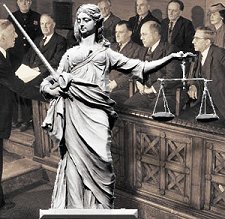
Lady-justice-jury.jpg

Williams Oinonen LLC (Good Georgia Lawyer) is a member of AAJ, the American Association for Justice. AAJ shares the same commitment as Williams Oinonen LLC, making certain people have a fair shot at obtaining justice through the legal system when they are injured by the wrongdoing or negligence of others. We believe this even when it means challenging big foreign corporations. The problem is that a recent ruling by the United States Supreme Court this past month makes it even harder to challenge foreign corporations and easier for companies outside the United States to get off the hook when they create a product that injures or kills an American consumer.

The U.S. Supreme Court's decision in McIntyre Machinery v. Nicastro is the case that creates challenges and makes it much more difficult to hold foreign manufacturers accountable in the U.S. court system.

American Association for Justice Gibson Vance commented on this decision stating: "Simply put, foreign companies that market and sell their products in our country should not be able to evade accountability. . . In our global marketplace, this decision will allow foreign manufacturers to sell their products without adhering to our safety standards."

Legislation commenced in the last Congress - the Foreign Manufacturers Legal Accountability Act - would insure that foreign manufacturing companies are held accountable to the same United States safety standards or be held subject to our civil justice system by requiring, as a condition of entering the markets, foreign corporations to have a registered agent to accept service (the papers which are "served" to a defendant subjecting him to a lawsuit) on behalf of foreign manufacturers. Doing so would mean that they automatically were subject to jurisdiction in U.S. courts, one challenge to holding foreign manufacturers to the same safety regulations as corporations in the United States.

"This decision not only hurts consumers, but also U.S. distributors and businesses that must adhere to safety laws and regulations that foreign manufacturers can avoid," said Vance. "Congress must act quickly to address legal jurisdiction in our global marketplace."

According to the AAJ, 83 percent (312) of the 377 recalls announced by the Consumer Product Safety Commission (CPSC) in 2009 were from foreign corporations!

Big powerful lobbyists through an intense lobbying and media campaign effort have tried to convince Americans to think there are too many frivolous lawsuits out there. But the real truth is that these lawsuits are often the last defense and safety net against violations of our constitutional rights and against large corporations who violate American consumer rights without redress. Whether it is going after Chinese manufacturing companies that are pumping toys that contain poisonous lead into our market, or whether it is a violation against one's freedom of religion (First Amendment) or freedom to bear arms (Second Amendment), the Seventh amendment is the one recourse that provides Americans with a constitutional right to a civil jury system to insure that our rights are enforced and our liberties are protected.

Whether you are a Tea Partier, Republican, or Democrat, everyone who believes in protecting and preserving our United States Constitutional rights should be concerned about the insidious attack on our 7th amendment right to civil justice. Unfortunately, the recent United States Supreme Court's ruling has made it even more difficult for Americans to use their 7th amendment right when they require civil justice because of violations and wrongs done by a foreign corporation. Whether it is foreign imported baby milk that contains poison or a foreign made vehicle that explodes killing our loved one--we need to insure that foreign corporations are held to the same safety standards as American companies. And we need to insure that Americans have the same constitutional rights to seek legal redress for wrongs committed by foreign corporations just like they would have against a U.S. domestic corporation.

There should not be a double standard. What is good for the goose should be good for the gander. If foreign corporations are allowed to do business here, they need to be willing to play by our rules. No one should have the right to injure or kill an American consumer by hiding behind a foreign veil of protection and evading the American civil justice system.

For more information on the 7th amendment Constitutional right to a civil justice system, we recommend reading our previous article here.

August 14, 2011

Georgia Contract Lawyer Explains: When Does a Contract Not Have To Be In Writing?


contract fists.JPG

Good Georgia Lawyer recently just explained when a contract needs to be in writing to be enforceable.

Today's article discusses when contractual agreements are enforceable without writing, for example, an oral agreement between two parties. When should this matter? Well, for one thing, in the event of a contract dispute, not having a contract in writing would certainly matter. Contractual disputes sometimes hinge on the meaning of a contract. One party says that they were promised by the other party to do something and the other party claims otherwise. This is why, as a general rule, it is always better to make sure you have a contract in writing.

But what if you don't? One of the defenses to a breach of contract lawsuit lies in the statute of frauds defense as explained in the earlier article, some contracts need to be in writing to be enforceable.

Nevertheless, there are times where the statute of frauds defense does not apply and you don't need the writing to prove that a contract does exists. The Official Code of Georgia § 13-5-31 explains that contracts don't need to be in writing under the following conditions:

(1) When the contract has been fully executed: An example would be if I paid Uncle Bob $500.00 to paint my house. Uncle Bob receives a check for $500.00 that he promptly cashes and paints my house. Here, the contract has been fully executed and both parties have done what was promised. If I want to sue Uncle Bob later because I allege he did such a terrible job, I don't need a written contract to prove that a contract indeed existed.

(2) Where there has been performance on one side, accepted by the other in accordance with the contract:: Under the same example, what if the performance above was merely one sided? I give Uncle Bob the $500 check which he promptly cashes. Unfortunately, Uncle Bob has fallen off the wagon and spends his days in the local watering house rather than painting my house. If I have to take Uncle Bob to court, can I prove there was a contract even though I didn't put it in writing? Yes! According to Georgia law, there has been performance on one side (my payment of $500) accepted by Uncle Bob in accordance with the contract.

(3) Where there has been such part performance of the contract as would render it a fraud of the party refusing to comply if the court did not compel a performance: Let's say I don't pay Uncle Bob the $500 but wait till he finishes the house. Then he paints 95 percent of the entire house and I tell him "sorry sucker! I tricked ya, not gonna pay!" Here, Uncle Bob doesn't need a written contract to sue me because there has been such part performance of the contract that it would render fraud if I didn't pay Uncle Bob what he was owed.

These are some very general examples to give you an idea of when contracts don't need to be in writing under Official Code of Georgia § 13-5-31. Nevertheless, we hope by now you can tell that it is always a very good idea to make sure that contracts are in writing.

Because the law is so complex, it is also wise to have a good Georgia lawyer draft and/or review your contracts in order to insure that your legal rights and interests are protected. Contact Williams Oinonen LLC for more information.

August 11, 2011

When Does A Contract Need To Be In Writing To Be Enforceable?


contract.jpg

We have discussed the definition of what a contract is in the state of Georgia. We've also discussed the different types of contracts in Georgia. And we've discussed rules for interpreting contracts here in Georgia.

Today we are going to discuss when a contract needs to be in writing. Another name for this is called "statute of frauds" which is a defense someone can use when they are sued for a breach of contract. It is a good defense because it keeps people from making up lies that aren't true.

For example, even though a contract can at times be in the form of an oral agreement, what keeps my Uncle Bob from fraudulently filing a lawsuit and then telling a judge that I promised to pay him a million dollars in exchange for his rickety old shack that is falling apart? Obviously, I never would promise Uncle Bob, or anyone else that matter, one million dollars to buy their rickety old shack that is falling apart. But what keeps Uncle Bob or someone else from fraudulently claiming such an oral contract exists? Well, the answer lies in something called the statute of frauds: the requirement that certain contracts need to be in writing so you can prove the truthfulness of their existence and show that someone is not committing "fraud" by lying about a contract that does not exist.

The statute of frauds is set out in O.C.G.A. § 13-5-30 entitled "Agreements required to be in writing." It says:


"To make the following obligations [requirements, legal promises, contractual responsibilities] binding on the promisor [the person who promised to do something in the contract agreement], the promise [also known as the contract] must be in writing and signed by the party to be charged [the person who is promising to do something] therewith or some person lawfully authorized by him [i.e. that person's agent who has legal authority to enter into contracts on behalf of that person].

Here are the contracts that are required to be in writing:

(1) A promise by an executor [someone assigned to handle a will], administrator [someone assigned by the court to handle a person's property after they die if there has been no will], guardian [someone who takes care of someone else], or trustee to answer damages out of his own estate [if someone is owed money because of an injury caused to them by someone who has died it would have to come out of what is known as their estate. This debt or judgment would have to be in writing, either by a court order or by a written contractual agreement.];

(2) A promise to answer for the debt, default, or miscarriage of another [if someone stopped paying/defaulted on their student loan their co-signer's agreement to be responsible for that loan and to pay for it would need to be in writing];

(3) Any agreement made upon consideration of marriage, except marriage articles as provided in Article 3 of Chapter 3 of Title 19 [for example a prenuptial agreement];

(4) Any contract for sale of lands, or any interest in, or concerning lands [selling property to someone else, in the case of my example above, buying Uncle Bob's rickety shack];

(5) Any agreement that is not to be performed within one year from the making thereof [if the job will take over a year to do something then it needs to be in writing];

(6) Any promise to revive a debt barred by a statute of limitation [the statute of limitations on a written contract is six years, so if at the seventh year you agreed to pay the debt you owed it would need to be in writing to be enforceable]; and

(7) Any commitment to lend money [a banker promising to loan a small business person a loan needs to be in writing].

Those are all the different types of contracts that must be in writing to be enforceable. The moral of this story is to make sure that you get contracts in writing. Even if they don't fall under the statute of frauds, it is always better to have something in writing in the event of a business dispute. Better yet, because the law is so complex, it is very important to have a lawyer help you draft important contracts or and review important contracts before you sign them in order to protect your legal interests.

August 8, 2011

Suing for Fraud And Breach of Contract in Georgia


Contract Newer.jpg

Good Georgia Lawyer is sometimes asked by our business owners: "Can I sue for both fraud and breach of contract?" The answer is: "Yes you can!"

We have discussed this issue in a previous article, but we'll offer further reasoning: It has been well established for decades in Georgia law that the Plaintiff can plead alternative theories of both breach of contract and fraud and is entitled to pursue inconsistent remedies until judgment. See Estate of Sam Farkas, Inc. v. Clark, 238 Ga. App. 115, 517 S.E. 2d 826 (1999) (referring to both causes of action); Carpenter v. Curtis, 196 Ga. App. 234, 236, 395 S. E. 2d 653 (1990) physical precedent) ("Affirmance of the contract by the defrauded party does not necessarily deprive him of the right to sue for damages for fraud, as the right to affirm and the right to fraud damages coexist.")

Under O.C.G.A. § 13-5-5, fraud renders contracts voidable at the election of the injured party. Fraud ordinarily gives injured party option either to rescind contract so induced, or, by affirming contract, to claim damages as compensation. Barfield v. Farkas, 40 Ga. App. 559, 150 S.E. 600 (1929); Nalley & Co. v. Moore, 51 Ga. App. 718, 181 S.E. 429 (1935); Brown v. Ragsdale Motor Co., 65 Ga. App. 727, 16 S.E.2d 176 (1941).

What are the essential elements to show fraud? To prove fraud and deceit, you have to show: (1) that defendant made representations; (2) that at time defendant knew were false (or had what law regards as equivalent of knowledge); (3) that defendant made the representations with intention and purpose of deceiving plaintiff; (4) that plaintiff relied upon such representations; and (5) that plaintiff sustained alleged loss and damage as proximate result of the representations having been made. McBurney v. Woodward, 84 Ga. App. 807, 67 S.E.2d 398 (1951).

For more information on resolving a business contract or dispute, contact Williams Oinonen LLC.

August 3, 2011

Georgia Fair Business Practices Lawyer Explains Unfair and Deceptive Practices


bizz.JPG
Question: Dear Good Georgia Lawyer,

Recently my husband purchased a set of used mechanical engines from a dealer who advertised the engines had "never been in previous wrecks." The dealer also never provided us with any implied "as is" warranty disclaimer until after we bought the engines. Shortly after buying the engines, we learned that they had been salvaged from previous wrecks. What are our legal rights under the Georgia Fair Business Practices Act?

Answer: Defendants engaged in unfair and/or deceptive business practices which violated the Georgia Fair Business Practices Act O.C.G.A. §10-1-390 et seq by failing to provide the implied warranty disclaimer prior to this consumer transaction. Defendant further engaged in unfair and/or deceptive business practices by expressly warranting that the engines "had never been in wrecks."

Notably, the Georgia Office of Consumer Affairs Auto Advertising and Sales Practices Guide explains that if an advertisement made implied or express representations that have the capacity, effect, or tendency of misleading consumers without certain qualifying information, the failure to disclose the information is a violation of the Fair Business Practices Act.

Furthermore, qualifying information must always be clearly and conspicuously disclosed, meaning that it is presented in a reasonably understandable format. Consumer buyers should not have to search for terms and conditions. Advertisements will be considered deceptive if necessary disclosures or disclaimers are not made, if facts that are material are not stated, and if disclaimers/disclosures are inconspicuous. See, e.g., Energy Four, Inc. v. Dornier Medical Sys., Inc., 765 F. Supp. 724, 731-733 (D. Ga. 1991).

What is an inconspicuous representation? If consumers need to search for the disclaimer in fine print that they can barely read or on the opposite side of an advertisement, this is an example of inconspicuous.

Examples of deceptive disclosures:

1. Asterisks and footnotes that make they buyer look
to another place in an advertisement;
2. The use of any print size so small as to be not easily readable. Any type
size 10 point or larger is considered easily reasonable.

When buyers justifiably rely on sellers knowing, false advertising, false representations and inducement tactics, a violation occurs. When a seller commits unfair and/or deceptive practices, they buyer is entitled to both general and exemplary damages, as well as being entitled to treble damages because of the intentional violations under the Georgia Fair Business Practices Act. See Conseco Finance Servicing Corporation v. Hill, 252 Ga. App 774 (2001).

A written notice giving a thirty day demand to the seller, which under Georgia law is to be liberally construed, must be timely sent prior to the filing of a Fair Business Practices Act violation. See Lynas v. Williams, 216 Ga. App. 434, 435 (1995).

Contact Williams Oinonen LLC for more information on the Georgia Fair Business Practices Act at 404-654-0288.

August 2, 2011

Understanding Implied Warranties Under Georgia Law


mobile home1.JPG
Recently, a client hired us to solve a legal question/problem about a used mobile home that they recently purchased:

Question:

Dear Good Georgia Lawyer:

I recently purchased a used mobile home from a mobile home dealer. They never told me that they were selling it "as is". They never gave me any "as is" implied warranty disclaimer form until after I had made the purchase. Then they suddenly tried to claim there was no implied warranty. Unfortunately, the very day after I purchased it, the engine exploded destroying the front part of the mobile home. Do I have a claim for breach of implied warranty?

Answer:

In this situation, the sellers never provided you the implied warranty disclaimers disclosures prior to the sale of the mobile home. O.C.G.A. §11-2-314 holds that unless excluded, a warranty that the goods shall be merchantable (fit for the ordinary purpose for which goods are used) is implied in a contract for their sale if the seller is a merchant with respect to goods of that kind. Georgia courts have held that an implied warranty is not excluded when a paragraph written in same size and color type as all other paragraphs on back of form fails completely to comply with O.C.G.A. § 11-2-316 for excluding the warranties implied by law in O.C.G.A. § 11-2-314. Chrysler Corp. v. Wilson Plumbing Co., 132 Ga. App. 435, 208 S.E.2d 321 (1974).

Additionally, Georgia courts have held that a waiver must be clear and certain. Contracts intended to waive implied warranties written into the sale by law should be clear and certain on that point. Wilson v. Eargle, 98 Ga. App. 241, 249, 105 S.E.2d 474, 479 (1958) (decided under former Code 1933, § 96-301). Furthermore, the courts have determined that an inconspicuous disclaimer in installment contract could not constitute exclusion of implied warranty of seller that mobile home was fit for ordinary purposes. BCS Fin. Corp. v. Sorbo, 213 Ga. App. 259, 261, 444 S.E.2d 85, 88 (1994).

Moreover, Georgia courts have ruled that a writing would, regardless of its "conspicuousness," be ineffective to disclaim the implied warranty of merchantability if that writing nowhere specifically mentions "merchantability." Leland Indus., Inc. v. Suntek Indus., Inc., 184 Ga. App. 635, 362 S.E.2d 441 (1987).

Because the sellers never once made any mention of "merchantability," or "as-is" or provided you with any type of implied warranty disclaimer prior to the sale, then according to the law they failed to disclaim the implied warranty of merchantability. Consequently, you do have a legal claim against them for breach of implied waranty.

August 1, 2011

Understanding Express Warranties Under Georgia Law


boat.JPG

Oftentimes our clients hire us to resolve interesting questions and problems. Here is a recent one that addresses the issue of express warranties:

Question:

Dear Good Georgia Lawyer,

Recently I bought a used boat from a boat shop off of Ebay from a boat shop dealer. They advertised in writing: "This boat is off my front line and it needs nothing but a new home!!. . . Has undergone a 125 point inspection. . Great Boat!. . . I do not sell any boats from my dealership that have issues and problems." As soon as the boat arrived from the seller at my home on Lake Lanier, I turned the ignition on and it immediately caught on fire. Do I have a claim for breach of express warranty in Georgia?"

Answer:

Under O.C.G.A. §11-2-313, express warranties by the seller are created by "any affirmation of fact or promise made by the seller to the buyer which relates to the goods and becomes part of the basis of the bargain," or "any description of the goods which is made part of the basis of the bargain creates an express warranty that the goods shall conform to the description." Moreover, it is not necessary to the creation of an express warranty that the seller use formal words such as "warrant" or "guarantee" or that he have a specific intention to make a warranty. Defendants breached their express warranty to you in particular, that: "This boat is off my front line and it needs nothing but a new home!!. . . Has undergone a 125 point inspection. . Great Boat!. . . I do not sell any boats from my dealership that have issues and problems." Notwithstanding such warranty, the boat did have issues and problems catching on fire as soon as the ignition was turned on. It would be important to have an expert fire inspector identify the cause and origin from this fire to determine that would have clearly been identified in a thorough 125 point inspection. Based on the facts as you have thus shared, it does sound that the express warranty was in fact breached.

The law states that expressly warranted statements by the Defendants cannot be negated even by any other warranty disclaimer. E.g. City Dodge, Inc. v. Gardnere , 232 Ga. 766, 208 S.E.2d 794 (1974). In City Dodge, Inc. v. Gardnere the Georgia Supreme Court held that an express warranty that the car dealer had made "that the car had not been wrecked" was not negated even though the car dealer sold the car "as is" in the purchase agreement. Moreover, the courts have also held that it is unreasonable to allow an express warranty to be negated by disclaimer of warranty in the same contract. Century Dodge, Inc. v. Mobley, 155 Ga. App. 712, 272 S.E.2d 502 (1980). Consequently, the express warranty could not have been disclaimed regardless and a breach very likely occurred.

Contact Williams Oinonen LLC for more information on contracts and warranties.

July 30, 2011

Georgia Business Lawyer Explains Accord & Satisfaction: When Does A New Contract Cancel The Old Contract?


handshake.JPG

The Official Code of Georgia § 13-4-101 explains the elements and requirements of what is known as "accord and satisfaction." Accord and satisfaction happens when two parties to a contract, by a subsequent contract, have satisfied the first previous contract, and the subsequent contract has been executed.

What does this mean in simple, plain English?

Well, there are two parts to this law. In a nutshell, the execution of this new, second agreement may amount to a satisfaction of the first, older former contract for two reasons:

1. First, where it is so expressly agreed by the parties (both people state so); or

2. Second, if there was no such agreement to satisfy the first contract, if the new promise is founded on a new consideration (a promise to do something like pay money), the taking of it is a satisfaction of the former agreement.

Here is a good and easy example to understand what it means:

What if I had a contractual agreement with my Uncle Bob that I would hire him to build me a backyard shed for $30,000? Uncle Bob and I agree that I will pay him $10,000 to start the project and $5000 at the end of each week until he is finished.

Unfortunately, during the course of the shed building, Uncle Bob starts drinking again and can barely pick up a hammer to nail a board in straight. The shed turns out completely lopsided and crooked. I tell Uncle Bob that there is no way I am paying him $30,000 for this shed that looks like the leaning tower of Pisa. So, Uncle Bob and I make a new agreement, subsequent from our first contract where I pay him $20,000 rather than the $30,000 I originally promised him.

What is the consideration in this new subsequent agreement? The consideration is that for a $10,000 savings, I gave up what I was entitled to: a well-constructed shed. Uncle Bob gives up his right to full price to avoid being sued for a shoddy performance. Once accord and settlement has occurred, Uncle Bob and I have given up the right to sue for more money under this settlement agreement.

Months later when Uncle Bob is back on the wagon, can he sue me for the $10,000 I was supposed to pay him from the first contract? Can I sue him because I am still mad about the ugly crooked eyesore in my backyard? No! Accord and satisfaction has occurred.

As the Georgia courts have ruled: "Accord and satisfaction is an agreement between two parties to give and accept something in satisfaction of the right of legal action which one has against the other, which when performed is a bar (a blockade) to all actions on this account. Woodstock Rd. Inv. Properties v. Lacy, 149 Ga. App. 593, 254 S.E.2d 910 (1979); M.W. Buttrill, Inc. v. Air Conditioning Contractors, 158 Ga. App. 122, 279 S.E.2d 296 (1981).

Have more questions? Read more here and consider contacting us today to schedule an appointment.

Continue reading "Georgia Business Lawyer Explains Accord & Satisfaction: When Does A New Contract Cancel The Old Contract?" »

July 26, 2011

What If It Is Impossible To Complete A Contract, Can You Get Out Of It? Acts of God And Other Impossibilities Explained


betterlightning.JPG

Sometimes unavoidable emergencies happen. Lightning strikes. Tornadoes blow through Georgia. Floods, fires, and other natural disasters occur. These are called in legal terms "acts of God." What does Georgia law say about God's actions having an effect on a contract?

The Official Code of Georgia Annotated § 13-4-21 actually has a section entitled "Effect of Act of God." No, this is not a religious passage. Rather, this is referring to natural disasters and the like which are all beyond the control of humans, and how these acts have an effect on the parties responsible for performing a contract.

Not everything is considered an act of God. Wars are not. Felder v. Oldham, 199 Ga. 820, 35 S.E.2d 497 (1945). Neither are "reasonably expected rains." Tasker v. Baugh & Johnson, 124 Ga. 846, 53 S.E. 266 (1906). Of course we all know in Georgia that heavy rains are very reasonably expected, especially in the summer time! Also, an injury (like those caused by an automobile collision) is not an "act of God" if it is caused by the negligence of man. Georgia S. & F. Ry. v. Barfield, 1 Ga. App. 203, 58 S.E. 236 (1907)

Act of God was defined by the Georgia courts over 100 years ago to mean any "accident produced by physical causes which are irresistible; such as lightning, storms, perils of sea, earthquakes, inundations, sudden death, or illness. [Also] an act of God excludes all idea of human agency." Cannon v. Hunt, 113 Ga. 501, 38 S.E. 983 (1901).

The statute clearly explains that if the performance of a contract becomes impossible as a result of "an act of God," such impossibility shall excuse the non performance of the contract, except where, by proper prudence, such impossibility might have been avoided by the person who had promised to do something.

It is always good to have an "Act of God" clause in a contract in the unfortunate rare event something does happen which makes the contract impossible to perform. For example, what if I decide to rent your big red barn for my wedding day reception country hoe-down shin-dig? It is the perfect space for the wedding reception luncheon and has a nice wood floor for a dance. It is also perfect to fit the 200 plus guests I plan to invite.

You and I have a contract which states that I agree to pay you $1000 to rent your big red barn on my wedding day. Unfortunately however, lightening strikes and your big red barn burns down to the ground one month before I am about to get married.

What does the law say about the legal obligations of our contract? Can I sue you now for not being able to perform your end of the bargain---letting me host my wedding reception in your barn? Well, the law is clear. O.C.G.A. § 13-4-21 says no. An "act of God" has intervened and it is now impossible to perform your end of the contract. Now it is likely that you will need to return the $1000 to me in order to avoid a claim of "unjust enrichment," nevertheless, I cannot sue you for failing to provide me your big red barn for my wedding day.

This is an example of how the legal theory of "impossibility" can be a strong defense to performing a contract. A good contract will have an actual "Acts of God" clause in it. Whether you are an atheist or devoutly religious, an "Acts of God" clause in a contract obviously refers to what happens if there is some emergency (not caused by a human) that renders the contract impossible to perform. It is always good to have the parties agree on "plan B" ahead of time, in writing, as part of the contract.

To understand your contractual legal rights and obligations better, it is always a good idea to consult with a good Georgia lawyer.

Continue reading "What If It Is Impossible To Complete A Contract, Can You Get Out Of It? Acts of God And Other Impossibilities Explained" »

July 25, 2011

Cancelling a Contract After Three Day Cooling Off Period: Georgia Contract Law Explained--Part Two


contract fists.JPGThis is part two of our article about cancelling contracts within a three day cooling off period in Georgia. The three day cooling off period is actually federal regulation which is very narrowly applied, so make sure you carefully read part one of our article before reading the following.

It is also important to understand that even if the three day cooling off period does not apply to the facts of your case, there may be other conditions and reasons (fraud, misrepresentation, mental/age incapacity, illegality unfair trade practices, and more) that may permit you to rescind (get out of) a contract. Thus, it is is well worth your while to schedule a legal consultation to immediately determine your rights.

Nevertheless, if in fact the three day cooling off period does apply, in connection with any door-to-door sale or sale that is anywhere other than the place of business of the seller, (i.e. NOT the seller's store but at a place like your home, a conference center, a dormitory, etc...), it constitutes an deceptive act or unfair practice for any seller to:

(a) Fail to give the buyer a fully completed copy of any contract in the same language, (e.g., Spanish), that was primarily used in the oral sales portion of the presentation showing the transaction date, name and address of the seller, and near the section in the contract for the buyer's signature or on the front page of a receipt, the following notice of cancellation, in bold face, in a minimum of size ten font stating:

"You, the buyer, can cancel this transaction at any time prior to midnight of the third business day after the date of this transaction. See the notice of cancellation attached for explanation of this right."

(b) Fail to furnish each buyer, a notice of cancellation that explains that they may cancel the transaction, without any obligation or penalty, within THREE BUSINESS DAYS from the above date.

If the buyer cancels, they must receive back their money within ten days and the buyer must make available to the seller at his or her home, any product that had been delivered to them under the contract. They need to return the product in good condition, or they must follow the instructions of the seller regarding the return shipment of the goods at the seller's expense and risk.

If the buyer makes the goods available to the seller and the seller does not pick them up within 20 days of the date of Notice of Cancellation, the buyer may keep or dispose of them. If the buyer fails to return the goods, then they remain liable for the contract.

(c) Fail, before providing copies of the "Notice of Cancellation" to the buyer, to complete the notices by entering the name of the seller, the seller's business address, the sales transaction date, and the date of cancellation.

(d) Fail to inform the buyer orally, at the time of the contract, of the buyer's right to cancel.

(f) Misrepresent the buyer's right to cancel.

(g) Fail to honor any valid notice of cancellation by refunding payments, etc.

(h) Sell the contract to a third party before the three day cancellation period is up.

(i) Fail, within 10 business days of receiving cancellation, to notify the buyer whether they intend to repossess any goods that were sold.

As stated earlier, this three day cooling off period falls under a federal regulation, specifically from the FTC (Federal Trade Commission) which outlines the rules concerning the cooling off period for sales made at homes or certain other locations. The three day cooling off period only applies to a specific, select type of sales. However, as mentioned previously, we cannot over-emphasize the importance of obtaining legal counsel, because even though the "three day cooling off period" may not apply in your situation, other legal theories may apply which might permit you to rescind (get out of) a contract.

However, time is of the essence in all of these situations. Thus, it is important to immediately meet with an attorney who can actually sit down and review your contract with you and listen to all the facts and circumstances of your situation in order to be able to properly advise you of your legal rights.

Continue reading "Cancelling a Contract After Three Day Cooling Off Period: Georgia Contract Law Explained--Part Two" »

July 23, 2011

Can I Cancel My Contract Within Three Days & Is There A Cooling Off Period In Georgia?--Part One


glasses.JPG

Generally, there is no cooling off period in Georgia except for very rare exceptions, however that doesn't mean you necessarily are trapped in a contract. There are other conditions and reasons (for example fraudulent misrepresentation, illegality, incapacity, unfair business practices, and more) that may permit you to rescind (get out of) a contract. However, time is of the essence so it is essential to seek a good Georgia lawyer who can help interpret your contract and advise you of your legal rights concerning the facts of your case.

In general, the "three day cooling of period" applies under federal law for only very specific contracts.

Three Day Rule Generally Applies Only Under The Following Conditions:

1. A seller went "door to door" and sold, leased or rented you a consumer good or service with a purchase price of $25 or more and;

2. They (not you) solicited the sale (even if it was following an invitation by you the buyer), and;

3. The offer to purchase was made anywhere other than the place of business of the seller, i.e. NOT the seller's store but at a place like your house, a convention center, a dorm, a workplace, etc...

There Is No Three Day Cooling Period If The Sale Was:

(1) Made pursuant to prior negotiations you the buyer had while visiting a retail business location which had a permanent fixed location (like a store) where the goods were exhibited (like a furniture shop) or the services were offered for sale on a continuing basis (like a computer repair shop); or

(2) The consumer is afforded the right of rescission by the provisions of the Consumer Credit Protection Act; or

(3) The buyer initiated the contact and the goods or services were required for an immediate personal emergency of the buyer, and the buyer gave the seller a separate dated and signed personal statement in the buyer's handwriting explaining the situation, acknowledging and waiving the right to cancel the contract within three days; or

(4) The sale was conducted and sold entirely by phone or mail; and without any other contact prior to delivery of the goods or performance of the services; or

(5)The sale was where the buyer initiated the contact and requested the seller to visit the buyer's home for the purpose performing maintenance or repairing personal property. (However, if in the course of such a visit, the seller sells the buyer the right to obtain additional services or goods other than replacement parts necessarily used in performing the maintenance or in making repairs, the sale of those additional services and goods do not fall within this exclusion); or

(6) Pertaining to the sale or rental or real estate property, to the sale of insurance, or to the sale of securities or commodities by a broker-dealer seller who is registered with the SEC.

There are always exceptions to the rule, so if you suspect you've been "done wrong" immediately seek legal counsel to learn what your legal rights and obligations are.

Continue reading "Can I Cancel My Contract Within Three Days & Is There A Cooling Off Period In Georgia?--Part One" »

July 18, 2011

Rules For Interpreting Contracts In Georgia


Contract Newer.jpg
The Official Code of Georgia § 13-2-2 sets out "rules for interpretation of contracts generally." The law states that the following rules, among others, shall be used in order to arrive at the truthful interpretation of a contract. This means if you are having a business dispute with your partner, vendor, tenant, or another company and a question turns on what the contract between you two actually means or whose version (yours or theirs) interprets the contract correctly, consider the following rules:

(1) Parol evidence is inadmissible to interpret the written contract.--Parol evidence is anything that is outside of the four written corners of the piece of paper that the contract is actually written on. This could mean conversations that you had over the telephone or notes written on a dinner napkin at a restaurant you were eating at during contract negotiations. The only time this outside evidence ("parol evidence")should come in to interpret the meaning of the written contract is if it the written contract is somehow ambiguous (unclear) and it is obvious that the written contract wasn't intended to represent the entire agreement.

(2) Words generally should be interpreted by their usual and common meaning; but a technical word used in particular trades should be interpreted the way they are generally used in that line of business. The local use of a word can be brought in as evidence to determine the actual meaning intended by the parties who entered the contract. In other words, if you and I were chicken farmers and we entered into a contract where you would sell me 500 Rock Cornish broilers, if there was any dispute as to what a "broiler" was, the courts would look to the ordinary local use of how Georgia chicken farmers interpret "broilers."

So for example, the courts would not interpret "broilers" to mean a grill you'd set on the stove for broiling and assume that you and I were in the pots and pans business. Rather, they'd look at the language of the Georgia chicken farmer industry to interpret what a "Rock Cornish broiler" actually means.

(3) The custom of any trade or business is only binding only when it is such a universal practice that it justifies the interpretation of the contract. This speaks for itself. We would want to know that the custom and practice of chicken farmers in Georgia and as long as it is a "universal practice" we would be able to use it in order to interpret the contract.

(4) Additionally, when you interpret a contract you should interpret it in such a way that will uphold the entire meaning of the contract, not just a few parts here and there.

(5) If the meaning of the contract is at doubt, and you have to interpret it in such a way that favors one party over the other, you should interpret it against the party that actually drafted (wrote up) the contract. This is because you assume that the writers of the contract were at the biggest advantage and the party that did not write it is already at a disadvantage so you should interpret in their favor.

Consequently, if you are the party that is in charge of drafting the contract, you had absolutely be sure that you have good competent legal counsel drafting your legal document. If you don't and you just throw something together that you cut and pasted off the internet, you are bound to run into trouble later on. Because you were the one who actually drafted the contract, the courts may disfavor your side if having to interpret the meaning of the contract in a business dispute.

Thus, always make sure the contract is drafted in such a way that protects your legal rights. We regularly represent clients involved in litigation disputes who often wish they had hired us much earlier so they might have avoided or prevented the litigation dispute in the first place.

What The Cardinal Rule Is For Interpreting Contracts:

Finally, we need to mention what the cardinal rule is for interpreting contracts as explained in the Official Code of Georgia Annotated § 13-2-3. The cardinal rule of interpreting the contracts is to ascertain ("figure out") what was the intention of the parties entering into the contract. If that intention is clear, it doesn't contradict a rule of law, and sufficient words (enough written descriptions) show what this intention is, then the "parties intent" is what the courts will enforce irrespective of all other technical or arbitrary rules.

July 14, 2011

Can I Get Out Of This Default Judgment If I Never Received Notice About My Case?


sad person.JPG
There have been times where we have had clients who have a default judgment against them for a case that they never even knew existed, i.e. proper service and notice were not provided. The good news, is that in order for a judgment to be valid proper service and notice is required.

What is Service of Process?

Technically, service of process is the means whereby "the court compels the appearance of a defendant before it for compliance with its demands. The term 'process,' in fact, includes any and every writ, rule, order, notice, or decree, including any process of execution, that may issue in or upon any action, suit, or legal proceedings. The object and purpose of process is to bring the defendant into court." See Davis & Schulman § 8:1. Definition and object of process and service thereof.

For over 150 years in Georgia, the purpose of this service of process was to provide the defendant notice of the lawsuit against him and bring him into court, service being the last step in the beginning of this legal action. Leonard v. Stocks, 12 Ga. 546, 1853 WL 1539 (1853); McDougald v. Carey, 12 Ga. 553, 1853 WL 1540 (1853).

Void service is the same as no service, and for over the past century, judgments rendered by a Georgia court not having jurisdiction of the person on account of void service are absolutely null and void. Parish v. Parish, 32 Ga. 653, 1861 WL 1431 (1861); Hobby v. Bunch, 83 Ga. 1, 10 S.E. 113 (1889). In a case where a Defendant has never been appropriately served with a complaint there is no way they could adequately respond to it with an answer within the thirty days it was due.

Due Process and Notice Explained

It is fundamental that notice to property owners is required prior to any action affecting vested property rights. Due process under both the 1983 Constitution of Georgia and the United States Constitution demands adequate notice that is reasonably likely to actually provide notice. See Art. I, Sec. I, Par. I of the 1983 Constitution of Georgia and the Fifth and Fourteenth Amendments of the United States Constitution.

An elementary and fundamental requirement of due process in any proceeding which is to be accorded finality is that notice---a written warning to all interested parties of the immediacy of the action is given which provides them an opportunity to present their objections. The notice must reasonably communicate the required information, and must afford a reasonable time for those interested to appear. Mullane v. Central Hanover Bank & Trust Co., 339 U.S. 306, 314-315, 70 S. Ct. 652, 94 L. Ed. 865 (1950); accord Hamilton v. Edwards, 245 Ga. 810, 811, 267 S.E.2d 246 (1980).

What is the result of not having proper service or notice?

When a party has not been provided service or notice of the action, to set aside the default judgment is not only authorized, but it would constitute an abuse of discretion to fail to do so. See O.C.G.A. §§ 9-11-60(d) and 15-10-43(g); Crenshaw v. Crenshaw, 267 Ga. 20, 21(2), 471 S.E.2d 845 (1996); Johnson v. Mayor & City Council of City of Carrollton, 249 Ga. 173, 175-176(3), 288 S.E.2d 565 (1982).

Additionally, failure of counsel or a party acting pro se to receive notice of trial is such a defect as will authorize the setting aside of judgment. Beach's Constr. Co. v. Moss, 168 Ga. App. 462, 309 S.E.2d 382 (1983). The failure of counsel or a party acting pro se to receive notice of a hearing constitutes such a defect as will authorize the setting aside of the judgment under subsection (d)(3) of Housing Auth. v. Parks, 189 Ga. App. 97, 374 S.E.2d 842 (1988); TMS Ins. Agency, Inc. v. Galloway, 205 Ga. App. 896 (1992).

Thus, if a defendant was not provided adequate notice while they acted pro-se, the Court should authorize the setting aside of the judgment in order to avoid an abuse of discretion.

If you ever find yourself in this situation, retaining a competent lawyer to assist you is vital. A good lawyer will file a motion to vacate or set aside judgment and argue that based upon both law and equity, your motion to vacate judgment should be granted.